
 Amie Dawson, Ph.D.
Vibrator Materials Explained: What Actually Matters on Your Body
You buy a vibrator because the shape looks right, the marketing sounds reassuring, and the reviews say it feels amazing. Then it arrives and something small goes wrong. The surface feels draggy instead of smooth. It picks up lint from nowhere. It smells faintly chemical when you open the drawer. Or it feels fine for ten minutes, then starts to irritate you in that hard-to-describe way that is not exactly pain, not exactly allergy, just a distinct no.
That is usually when the materials question begins.
Not before.
Vibrator brands love words like silky, velvety, skin-like, and premium. Those are mood words. They are not material information. And with vibrators, the material is not just about safety. It changes how the vibration travels, how the surface drags or glides, how the toy ages, and how much trust you can place in it.
The first question is not “Does it feel luxurious?” It is “Can I actually clean this well?”
For vibrators, the most useful materials divide is simple: nonporous versus porous.
That matters more than people realize.
A porous vibrator does not always look rough or cheap. It can look smooth and still hold onto residue, odor, body fluids, soap, and microbes more stubbornly than a nonporous one. And because vibrators often have seams, buttons, charging points, and textured heads, material predictability matters even more. A nonporous surface does not make a toy perfect, but it gives you a cleaner starting point and a smaller margin for unpleasant surprises.
This also changes how I think about sharing. Shared toys should be washed between uses, and if they are used between partners, a new condom should go on them each time. That advice exists for a reason. A surface that looks clean is not always a surface that resets cleanly.
Clean enough is not the same as cleanable.
That is exactly why material and cleaning cannot really be separated. A surface that is easy to clean in theory still has to be cleaned well in practice, which is where cleaning a vibrator properly becomes part of the materials conversation, not a separate housekeeping one.
The vibrator materials I trust most are silicone and ABS plastic
When I want the least complicated answer, I start with silicone and ABS plastic.
They are both nonporous categories commonly treated as easier-to-clean body-contact materials in clinically grounded guidance.
Silicone is the material most people think they want, and often for good reason. It is usually softer, gentler, and more flexible than hard plastic. On the body, that often means less stark contact on the vulva, less abrupt pressure at the entrance, and a more forgiving feel when you hold a toy in one place for a while.
ABS plastic is less romantic and more underrated. It is hard, smooth, and direct. On vibrators, that can be a feature. A hard plastic bullet or pinpoint tip often feels more exact because less of the vibration gets softened before it reaches the body. It does not feel fancier. It feels cleaner in its delivery.
That is why some people try a soft-coated vibrator, think the motor feels weak, then switch to a hard plastic one and suddenly understand the toy. The power did not necessarily change. The transmission did.
It does not feel stronger.
It feels less filtered.
That is also why a materials question can quietly become a sensation question. Sometimes what feels like a better motor is really just a surface that is delivering the signal more clearly, which is very close to the difference explored in how firmness affects what you feel.
That distinction matters.
The softest material is not always the smartest one
This is where a lot of people get misled.
A vibrator can feel plush in your hand and still be the material I trust least near intimate tissue. Soft blends sold under vague names like soft rubber, real feel, silky blend, or body-safe blend often leave you with less information than you should accept. Sometimes that means thermoplastic elastomer. Sometimes thermoplastic rubber. Sometimes a coating that sounded lovely on the product page and starts getting questionable six months later.
That does not mean every soft-touch vibrator is automatically a disaster. It means the tradeoff is real.
Materials sold with mood words instead of specifics are more likely to raise questions later about odor, tackiness, longevity, and hygiene. I do not like ambiguity here, and neither should you.
A material can feel expensive for thirty seconds in your hand and annoying for two years in your drawer.
That is usually the point where I stop listening to mood words and start reading the product page like it owes me specifics. It helps to know how to read a vibrator product page without getting misled before “velvety” starts standing in for real material information.
With vibrators, material changes the sensation before the body even reacts
This is the part many people feel but do not have words for.
Material is not just a hygiene issue. It is a sensation filter.
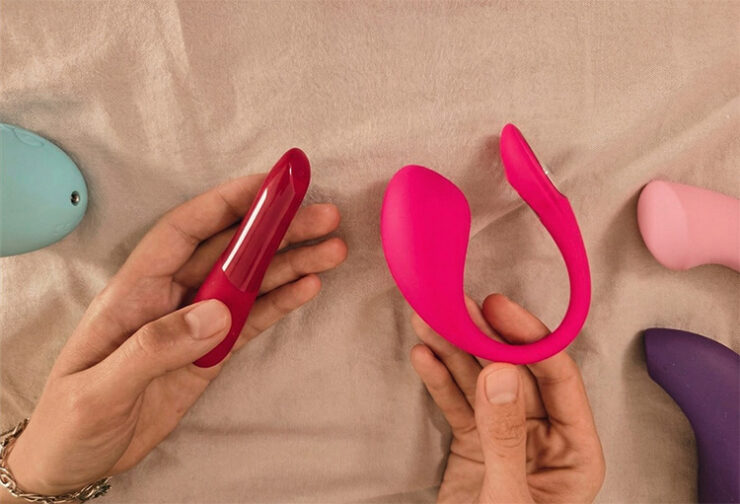
A thick soft silicone layer can cushion and spread vibration a little. A hard plastic cap can make the same basic motor feel more focused and immediate. A grippy matte finish can create more drag on the clitoris. A slicker surface can let the vibrator move without that faint rubbery pull.
On a vibrator, softness often becomes buffer. Hardness often becomes clarity.
You can feel this especially clearly with external toys.
Some vibrators do not feel too weak. They feel too padded.
Some do not feel too intense. They feel too exposed.
Some do not feel smaller. They feel less thin.
That is why two vibrators with almost the same shape can feel completely different once they touch the body. The motor matters. The material decides how much of that motor actually reaches you.
Sometimes “this vibrator irritates me” is a materials problem, not a body problem
This part deserves more honesty.
People are quick to blame themselves. They assume they are too sensitive, too dry, too particular, too complicated. Sometimes the issue is simply that the material is wrong for them, or the surface has started to break down, or the combination of material and lubricant is not working well.
That is not me turning this into a lube article. It is just part of the materials story. Silicone toys are generally paired with water-based lubricant because silicone lube is usually not recommended on silicone surfaces. A surface that gets weird after the wrong lube, or starts dragging after repeated wear, does not stay neutral on the body.
It starts speaking.
And sometimes what it says is irritation.
If a surface keeps coinciding with itching, rawness, or that vague aftermath that feels wrong every time, it helps to separate your body from irritation, rashes, or infections a vibrator setup may be causing or worsening. The problem is not always your sensitivity.
Latex can complicate this too. If a vibrator contains latex, or if you are using latex condoms over a toy and your skin keeps reacting, “my body hates vibrators” may be the wrong conclusion.
A sticky surface is not a minor quirk.
A chemical smell is not a personality trait.
Recurring irritation is not something I would train myself to ignore.
What this looks like when you are choosing a vibrator
Let me make this practical.
If I am choosing a small external vibrator for precise clitoral stimulation, I often lean toward ABS plastic or a firmer silicone tip. Why? Because I want the sensation to arrive clearly, without too much cushion. With tiny vibrators, a soft outer layer can blur the point of contact more than people expect. That is a materials issue, not just a design issue.
If I am choosing a first insertable vibrator, especially for someone who tends to tense up with penetration, silicone is usually the easier recommendation. Softer, gentler, more flexible body contact can make the toy feel less intrusive at the entrance and easier to settle into.
For a wand, the question is a little different. Wands usually stimulate through a larger head, so the material affects whether that broad contact feels plush and diffuse or more immediate and weighty. Here I care less about pinpoint precision and more about whether the surface feels draggy, lint-prone, overly squishy, or easy to keep clean over time.
Same category. Different logic.
That is why “What material is safest?” never feels like a complete shopping question to me. The better question is, “What material gives me the kind of contact I actually like, without creating hygiene or irritation drama later?”
That is also why I care so much about how a toy ages, not just how it feels on day one. Once a surface starts getting sticky, draggy, or harder to trust, the real question becomes when a vibrator should be replaced, not how much longer I can talk myself into using it.
My quick filter for vibrator product pages
I do not think most people need a chemistry course.
I think they need a sharper filter.
This is mine:
- If the body-contact material is vague, I move on.
- For the easiest low-drama options, I look first for silicone or ABS plastic.
- If the vibrator is going to be shared, used internally, or used across body openings, I get much stricter about nonporous materials and barrier use.
- If a vibrator gets tacky, smells stronger over time, sheds coating, or keeps coinciding with irritation, I stop trying to make peace with it. At that point, I am no longer asking whether the toy is a good fit. I am asking how to tell a quality vibrator from a low-quality or fake one, because a body-contact surface should not keep getting stranger the longer you own it.
You do not owe a bad material endless troubleshooting.
The goal is not a luxury surface
The goal is a vibrator that stops interrupting you.
That is what good material does. It does not demand attention in the wrong way. It does not keep asking whether it is clean enough, compatible enough, stable enough, gentle enough, or still intact enough. It lets the sensation come through without the surface becoming part of the problem.
A good vibrator should not make you monitor the object while you are trying to feel your body.
The best material is the one that disappears first.
Reviewed medical and clinical sources
- Rubin ES, Deshpande NA, Vasquez PJ, Kellogg Spadt S. A Clinical Reference Guide on Sexual Devices for Obstetrician-Gynecologists. Obstetrics & Gynecology. 2019.
- Rullo JE, Lorenz T, Ziegelmann MJ, Meihofer L, Herbenick D, Faubion SS. Genital Vibration for Sexual Function and Enhancement: Best Practice Recommendations for Choosing and Safely Using a Vibrator. Sexual and Relationship Therapy.
- Anderson TA, Schick V, Herbenick D, Dodge B, Fortenberry JD. A Study of Human Papillomavirus on Vaginally Inserted Sex Toys, Before and After Cleaning, Among Women Who Have Sex with Women and Men. Sexually Transmitted Infections. 2014.
- NHS. Sex Activities and Risk.
- NHS. Sexual Health for Lesbian and Bisexual Women.
- Cleveland Clinic. Vaginal Dilators: Purpose, Types & How To Use.
- Mayo Clinic. Latex Allergy – Symptoms and Causes.
- Cleveland Clinic. Latex Allergy: Causes, Symptoms, Diagnosis & Treatment.
- Mayo Clinic Press. How Do Vaginal Dilators Work?.
Add comment