 Amie Dawson, Ph.D.
A lot of people stay loyal to the exact same use pattern long after the body has stopped liking it.
Same toy. Same spot. Same pressure. Same goal.
That is often the problem.
When a body is moving through postpartum recovery, breastfeeding, perimenopause, menopause, medication shifts, stress, or chronic exhaustion, the toy may need a new role before it needs more power. Sometimes the vibrator that used to be the whole route to orgasm works better as a warm-up tool. Sometimes the internal toy becomes an external toy for a while. Sometimes the clitoral toy still works, but only once the body is already fully awake.
That is not lowering the bar.
It is changing the sequence.
And sequence matters more than people think. A body that does not welcome the first touch is much less likely to welcome the fifth one just because you stayed determined.
What I would change first in three very common body phases
If the body is postpartum or breastfeeding
I would assume less natural cushion, less margin for sharp contact, and less patience for pressure that lands too directly.
That usually means:
- start broader than you used to
- use lubricant before the tissue asks for it
- keep the first minutes external and indirect
- treat penetration as optional, not as the “real” goal
- pick a toy that can stay low and steady without feeling scratchy
This is also the phase where the body may want shorter, more forgiving sessions. Not because pleasure matters less. Because the nervous system is often carrying more than arousal alone.
Sometimes the best toy in this season is the one that asks the least from a tired body.
If the body is in perimenopause or menopause
I usually think in terms of reducing friction cost.
Not “How do I make this more intense?”
More like: “How do I make this easier for the tissue to welcome?”
That often means:
- more glide
- more ramp time
- less pokey contact
- broader or softer placement before direct clitoral stimulation
- more willingness to stop when something feels sandpapery instead of sexual
A lot of menopausal frustration is not failed pleasure. It is pleasure getting interrupted by dryness, sting, drag, or tissue that no longer forgives rough sequencing.
The body is still capable of a lot.
It just may need better conditions than it used to.
If the main shift is stress, overwhelm, or medication
This one is trickier because the body can feel present and absent at the same time.
You may want pleasure.
You may even want orgasm.
But the body keeps staying one room away from the sensation.
In that state, I would care less about the “best” toy and more about the toy that reduces decision-making. Fewer modes. Simpler controls. A shape that does not need micromanaging. A setup that lets the body stay with one clear sensation instead of auditioning six possibilities while your brain keeps asking whether anything is working yet.
Some bodies do not need more novelty when they are overloaded.
They need less negotiation.
The body often gives one of four very clear answers
When a toy stops working the way it used to, I listen for one of these patterns.
“Too sharp.”
Usually means less directness, more buffer, or more glide.
“Too vague.”
Usually means the contact got too spread out, too soft, or too under-anchored for the body to organize around.
“Too much too fast.”
Usually means the toy is arriving before arousal, or the body currently needs a longer runway than it did before.
“Nothing catches.”
Usually means the issue may be larger than angle alone: medication, hormonal change, fatigue, stress, pain anticipation, or a body that needs a totally different route into pleasure than the old one.
Those are not the same complaint.
They should not get the same fix.
This is also why old favorites can become weirdly wrong
People often panic when a beloved toy stops making sense.
I understand that.
A toy that once felt reliable can start feeling almost insulting. Not because it is bad, exactly. Because it keeps trying to deliver pleasure in a language your body no longer prefers.
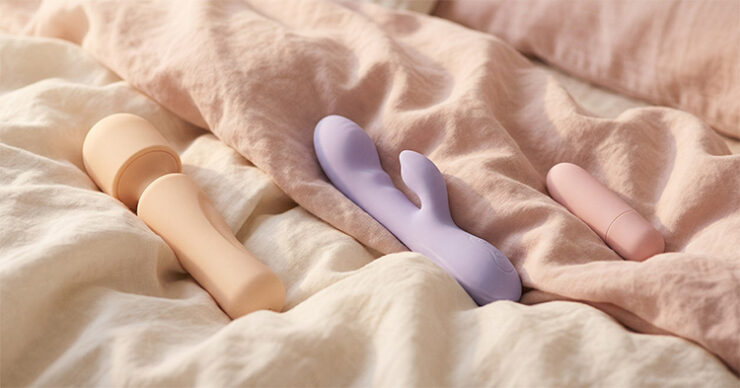
The old bullet that used to feel precise now feels thin.
The old rabbit that used to feel complete now feels like too much positioning and not enough payoff.
The old wand that used to feel dependable now feels broad in the wrong way unless the body is already far along.
That does not mean the toy betrayed you.
It means the body updated first.
And that is one reason I do not think “same toy forever” is always a realistic goal. Bodies age. Hormones shift. Birth changes tissue. Sleep changes arousal. Stress changes attention. Pelvic floor tension changes what the body reads as invitation versus intrusion.
The right toy for this version of your body may not be the same toy that made perfect sense three years ago.
That is not disloyalty.
That is accuracy.
What I would treat as a green light during a transition
Not orgasm first.
Something smaller.
I look for signs that the body is becoming more available instead of less:
- the tissue starts feeling warmer instead of more exposed
- the toy stops feeling like an object and starts feeling connected to the body
- you stop chasing the angle every five seconds
- the sensation deepens when you stay with it instead of getting thinner
- your pelvic floor softens instead of quietly bracing
Those are real wins.
They matter even if orgasm does not happen yet.
Because during a body transition, the first sign of progress is often not climax. It is that the body begins trusting the contact again.
And what I would treat as a stop sign
Some patterns do not need more troubleshooting. They need care.
I would stop and reassess if:
- light contact keeps turning into burning or stinging
- the entrance feels raw, knife-like, or suddenly impossible
- the body starts guarding before the toy even lands
- you get bleeding, persistent soreness, or pain that lingers after the session
- the whole experience keeps getting flatter and more upsetting no matter how carefully you adjust
That is not the moment to prove resilience.
That is the moment to believe the pattern.
Because a body in transition still deserves discernment. It does not owe you a performance just because the old script once worked.
A different body is not a lesser body
I think this is the part people grieve quietly.
They do not always miss orgasm itself. Sometimes they miss the old ease. The old shortcut. The old feeling that the body used to answer faster, more clearly, with less setup and less negotiation.
That grief is real.
But I would not confuse “different access” with “less sexuality.”
A body can need more warm-up and still be highly erotic.
A body can need more lubricant and still want a lot.
A body can stop loving one toy and still love pleasure.
A body can become more exact and still become more alive once the right kind of contact arrives.
This is why I resist the idea that hormonal or life-stage change is a simple decline story.
It is often a translation story.
The old instructions may have stopped working.
That does not mean the body stopped speaking.
It means you need a new map.
The better question now
Not:
Why doesn’t my old toy work like it used to?
Try this instead:
What does this body trust now?
That is a much kinder question.
Also a much more useful one.
Because once you ask it, the whole goal changes. You stop trying to drag a changed body back into an earlier version of pleasure. You start building from the body that is actually here.
And that body is not late.
It is not failing.
It is not less worth listening to.
It is simply asking for a more current answer.
Reviewed medical and clinical sources
- American College of Obstetricians and Gynecologists. Your Sexual Health. ACOG.
- American College of Obstetricians and Gynecologists. Vulvovaginal Health. ACOG.
- American College of Obstetricians and Gynecologists. When Sex Is Painful. ACOG.
- NHS. Vaginal Dryness. National Health Service.
- NHS. Menopause – Symptoms. National Health Service.
- Perelmuter S, Stokes C, Chapalamadugu M, et al. Postpartum and Lactation-Related Genitourinary Symptoms: A Systematic Review. Obstetrics & Gynecology. 2025;146(1):59-72.
- The NAMS 2020 GSM Position Statement Editorial Panel. The 2020 Genitourinary Syndrome of Menopause Position Statement of The North American Menopause Society. Menopause. 2020;27(9):976-992.
- Aneurin Bevan University Health Board NHS Wales. Women’s Pelvic Health. NHS Wales.
- Imperial College Healthcare NHS Trust. Overactive Pelvic Floor. NHS.
Add comment