
 Amie Dawson, Ph.D.
I expected the Lovense Ambi’s asymmetric shape to be a gimmick — the kind of design choice that photographs well on a product page and changes nothing against a body. Bullets are small, direct, uncomplicated. What could an angled mushroom head possibly add that a straight cylinder couldn’t?
Then I rotated it mid-session. Same motor, same power level, same spot. But switching from the rounded head to the thinner tapered edge changed the sensation so immediately — from a warm, spreading hum to a sharper, more focused pulse — that I actually paused. I don’t pause often during testing. This wasn’t a subtle difference. It felt like switching toys without switching toys.
That rotation moment is the reason the Ambi deserves a thorough review rather than a shrug. This isn’t a bullet that wins on one thing. It wins on versatility — and the engineering behind that versatility is more interesting than the marketing page admits.
Quick read: The Ambi is not just a stronger bullet. Its real trick is that the same motor can feel broad, focused, softer, or sharper depending on how you rotate the head.
Quick Verdict
| Design: |  (5.0 / 5) (5.0 / 5) |
| Comfort: |  (4.5 / 5) (4.5 / 5) |
| Power: | (5.0 / 5) |
| Experience: | (5.0 / 5) |
| Controls: | (5.0 / 5) |
| Value: | (4.5 / 5) |
Overall rating: 4.8 out of 5, based on design, comfort, power, experience, controls, and value.
The Lovense Ambi is a compact, unusually adaptable bullet with serious power, excellent app control, and a shape that genuinely changes the sensation when you rotate it.
You can buy this bullet toy here:
Buy it if you want a bullet that can shift between broad and pinpoint stimulation without switching toys, or if you want the best app control available in a compact vibrator. The Ambi’s wide power range (genuinely gentle to genuinely intense), asymmetric shape, and excellent partnered-sex profile make it one of the most adaptable bullets I’ve tested.
Skip it if you need deep, earth-shaking rumbliness at high power, or if you want a toy you can use at full intensity for over an hour without recharging. The Ambi’s upper register shifts toward buzzy, and the 55-minute battery life on high means it isn’t built for marathons.
Price: $69 (currently marked down from $119 on the Lovense site). The We-Vibe Tango X, its most direct competitor in this range, sits at a similar price point.
Sensation profile: Rumbly and deep at lower settings, neutral to moderately buzzy at higher intensities. Broader contact than most bullets (1.04-inch head vs. the Tango X’s 0.69 inches). Rewards angle experimentation and deliberate rotation. The sweet spot lives in the mid-range — not at maximum.
This feels like: warm, deeper movement when you stay lower; more urgent surface energy when you climb higher; and a completely different toy when you rotate the contact edge.
Best for: Someone who wants one bullet that adapts to multiple stimulation styles, fits well between bodies during sex, and connects to the most reliable app ecosystem in the category.
Skip this if: you already know your body wants one very specific thing: strong rumble at high power, extreme pinpoint precision, or long sessions without thinking about battery.
Marketing vs. Reality Score: 78/100
Verdict: Mostly honest, with selective framing
Lovense’s product page positions the Ambi as delivering both “intense vibration” with pinpoint clitoral stimulation and “deep rumbly vibrations” from its broader surface. The first half of that promise holds up cleanly — the Ambi’s top setting hits harder than many bullets and rivals some mid-sized vibrators. The second half requires an asterisk. The lower settings genuinely run rumbly, starting around 38 Hz, which is deep enough to feel like vibration pooling into tissue. But as you climb the power range, the frequency rises to around 97 Hz at maximum — moderately buzzy, not rumbly at all. You get intense or rumbly, depending on where you set it. Not both at once. The page doesn’t lie, but it frames the experience as though you’ll always feel that depth, and you won’t at the top end.
The “up to 2 hours” battery life claim is technically accurate at low settings, but anyone running it at serious intensity should expect closer to 55 minutes. The versatility, waterproofing, and app control claims all hold up solidly — Lovense’s app really is the best in the category, and the IPX7 rating is genuine.
Reader translation: Lovense is right about the Ambi being powerful and versatile. The missing detail is that “rumbly” and “intense” live in different parts of the range.
What You’re Looking At
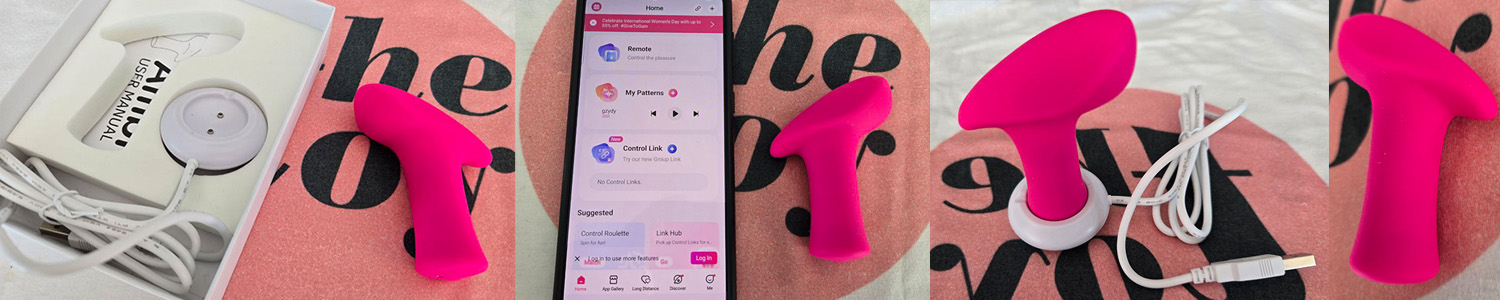
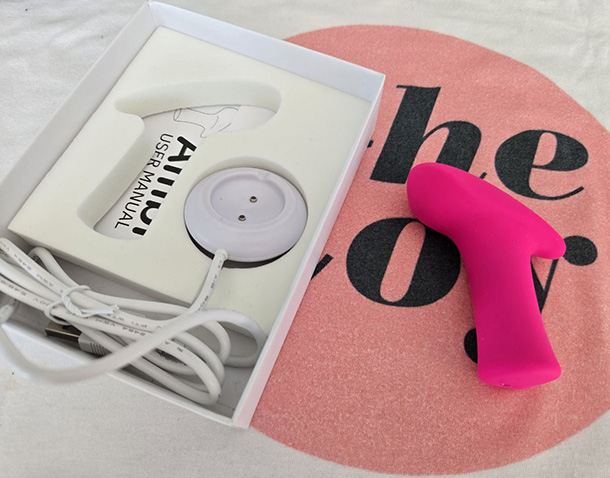
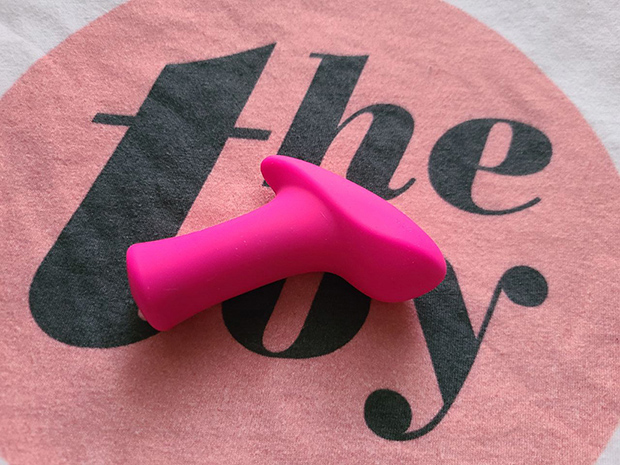
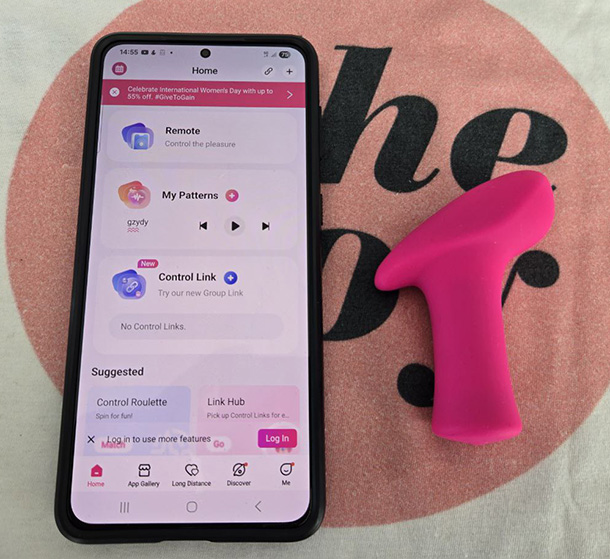
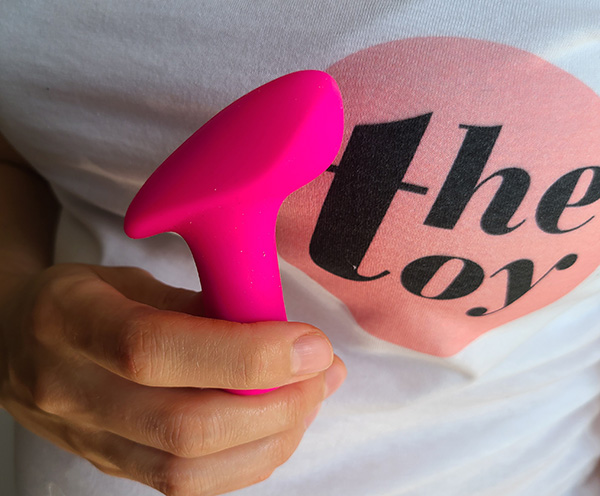
The Lovense Ambi is a rechargeable, app-controlled, IPX7 waterproof bullet vibrator wrapped in body-safe silicone. It measures 3.3 inches long, weighs 59 grams, and costs $69 on sale. The asymmetric head extends past the handle in both directions — a rounded, broader dome on one side, a thinner tapered tip on the other. One button controls three programmable intensity presets and vibration patterns; the Lovense Remote app unlocks the full continuous power range, custom patterns, music sync, and long-distance control.
This matters if: you hate being trapped between preset speeds. The Ambi is much better with the app because the slider gives you the small in-between changes the button cannot.
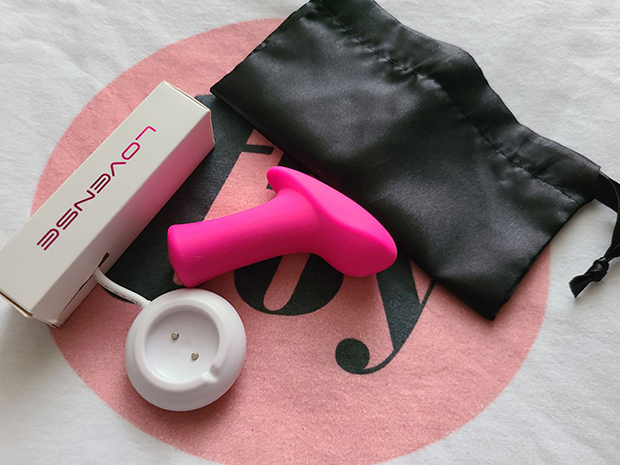
In the box: Ambi, USB magnetic charging dock, user manual, satin storage pouch.
What It Feels Like in the Body
This is where the Ambi gets genuinely interesting, and where the marketing story starts to get more complicated than “small but powerful.”
The Motor Character
The Ambi runs an ERM-style motor — the kind that produces physical displacement rather than just high-frequency surface vibration. That displacement is the main event. When I say a vibrator feels “deep,” I mean the tip is physically moving far enough per cycle that the vibration pushes into tissue rather than skating across it. The Ambi does this, increasingly so as the power climbs.
This feels like: the tip is physically moving into the tissue, not just fizzing on top of the skin.
The waveform isn’t perfectly clean, though. Oscilloscope readings show a saw-tooth pattern rather than a smooth sine wave, which translates to harmonic texture in the vibration — a slight graininess layered onto the primary movement. In practice, that reads as “buzzy-textured but not prickly.” The silicone shell, sitting around Shore A 60, does real work here. It’s firm enough to transmit the motor’s output without swallowing it, but soft enough to sand down the sharper edges of those harmonics. If this motor were housed in hard ABS plastic like some cheaper bullets, that harmonic content would feel more mechanical, more electric, more surface-irritating. The silicone acts as a filter between physics and skin.
This matters if: cheap bullets have ever felt electric or scratchy to you. The Ambi still has texture, but the silicone rounds off the worst edge.
That filtering matters more than most people realize. Firmness changes what a vibrator feels like just as much as power does — how direct the contact lands, how much harshness gets through, and how much your body has to manage on its own.
The sound profile runs broadband — no single piercing frequency spike, just a general motor hum. In the room, that translates to a soft “vrrrr” rather than the high-pitched “eeee” you get from poorly tuned PWM motors. At 35 dB on low and 46.9 dB on the highest setting, it’s genuinely quiet. I tested it behind a closed bedroom door and it was inaudible at every power level. Under blankets, it disappears entirely.
Noise translation: the Ambi is not silent in your hand, but the sound is low and soft enough that it fades into a room instead of cutting through it.
Setting by Setting
Low power starts rumbly — around 38 Hz, which is deep enough that the vibration feels like it travels rather than just sits. Tip displacement at this level measures 0.17 mm, which isn’t a whisper. There’s real movement happening. The sensation is warm, present, and has enough body to register as actual stimulation rather than a polite suggestion. Good for warm-up if you’re building slowly, but don’t mistake it for decorative — this is a usable setting, not filler.
This feels like: a real warm-up setting, not a decorative first speed. It has depth, but not much urgency.
Here’s something the marketing page won’t tell you, though: at this lowest speed, the handle displacement sits at 0.12 mm. That’s the highest handle vibration of any of the three levels. Your fingers buzz more at minimum than they do at medium. It’s not terrible — silicone dampens the worst of it — but it’s noticeable, and it’s counterintuitive. You’d expect more power to mean more hand buzz, but the Ambi’s isolation actually improves as you climb.
Practical translation: do not judge the Ambi by how it feels buzzing in your hand at level one. Its best control and isolation show up higher.
Mid power is where this bullet lives its best life. Tip displacement rises to 0.22 mm, velocity jumps to 38, and the frequency sits around 72 Hz — moderately rumbly, with the vibration starting to develop more surface presence without losing its depth entirely. But the real story is the handle: displacement drops from 0.12 to 0.08 mm. Stronger at the business end, calmer in your fingers. The isolation is better here than at any other setting. That means longer sessions with less hand fatigue, more precise placement control, and a motor character that balances depth and engagement without tipping into either extreme.
This mid-range is where the Ambi feels most refined. Not the most powerful, not the most dramatic, but the most usable. If you treat this as your default rather than always reaching for maximum, you’ll get better results. Research on genital touch preferences consistently shows that stronger isn’t automatically more effective — what matters is the match between stimulation character and individual nerve response, and the Ambi’s middle register gives you the widest window to find that match.
This mid-range is where the Ambi feels most refined. Not the most powerful, not the most dramatic, but the most usable. If you treat this as your default rather than always reaching for maximum, you’ll get better results. Research on genital touch preferences consistently shows that stronger isn’t automatically more effective — what matters is the match between stimulation character and individual nerve response, and the Ambi’s middle register gives you the widest window to find that match.
Maximum power changes the physics significantly. Displacement nearly doubles to 0.36 mm — this isn’t “vibrating” anymore, it’s “moving.” The tip is traveling far enough per cycle that you feel a heavier, more insistent physical push, something closer to a thud than a tingle. Velocity hits 55, the highest of all three levels, which means the contact point feels very alive and urgent. But the frequency has climbed to around 97 Hz — moderately buzzy. The deeper, rumbly quality from the low settings has been replaced by something more surface-forward and electrically present.
Handle vibration rises to 0.09 mm displacement — higher than mid, lower than minimum. So your hand notices max power, but not as much as it noticed the lowest setting. An odd curve, but a useful one.
For bodies that need strong stimulation and don’t mind (or actively enjoy) some buzzy texture, the top setting delivers real force. For bodies that numb quickly from surface buzz or prefer the sensation to pool rather than press, the maximum may actually be less effective than the mid-range. This is the setting where the silicone’s filtering matters most — without it, that high-frequency, high-displacement combination would feel harsh. The silicone rounds it into something insistent but tolerable.
Quick choice: use maximum when you need a final push. Use mid-range when you want the Ambi at its deepest, most sustainable setting.
How the Shape Changes What You Feel
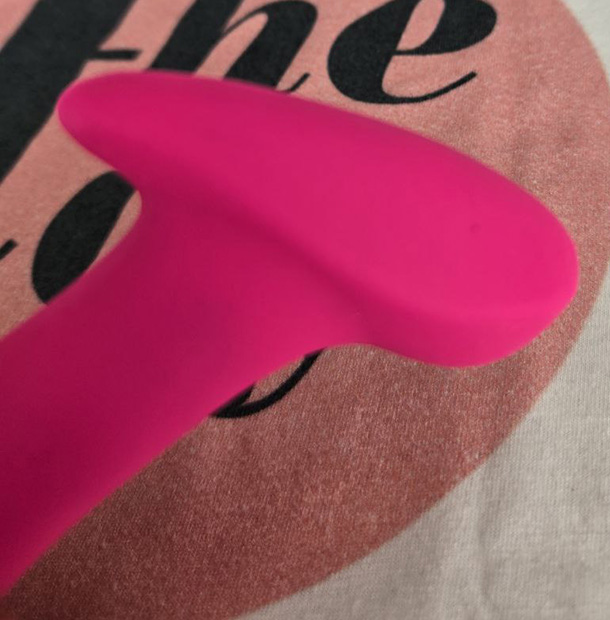
The Ambi’s 1.04-inch rounded head distributes pressure across a broader area than a typical narrow bullet tip. Compared to the We-Vibe Tango X’s 0.69-inch flat tip, the Ambi doesn’t stab. It settles. That broader contact surface means vibration spreads into surrounding tissue rather than drilling into one exact point. For people who find narrow bullets too sharp or who numb quickly from hyper-focused contact, the difference is immediate and significant.
This feels like: a broader landing pad for vibration, not a tiny point demanding perfect aim.
Rotate the Ambi to the thinner tapered edge, and the contact area tightens. The stimulation becomes more precise, more defined — better for targeting a specific spot, worse for relaxing into general coverage. The motor is slightly further from this edge, so the intensity doesn’t read quite as strong here, but the trade-off is sharper anatomical targeting.
Use this edge when: the broad side feels too diffuse and your body wants a clearer, more directed signal.
The flat side of the body gives you a third option — the broadest contact surface available, where vibration disperses across the most tissue. Useful during early arousal when direct stimulation would be premature, or for people who prefer stimulation to arrive diffused rather than concentrated.
Three zones from one toy. Each one genuinely different. That’s the engineering promise the Ambi actually delivers on.
Reader shortcut: before you increase power, rotate the Ambi. The contact shape may change the sensation more than another intensity step.
The Partnered-Sex Design Isn’t an Afterthought
A lot of bullets claim to work during sex. The Ambi is one of the few where the shape was clearly engineered for it, and you can feel the difference in practice.
The angled head means the handle doesn’t jut straight out from the contact point. It angles away. During missionary, that translates to the handle tucking along your body instead of jabbing into your partner’s pubic bone — a problem so common with straight bullets that most people don’t even realize there’s an alternative. I tested this during partnered sex, and the difference was immediately obvious. With a straight bullet, my partner could feel the hard edge of the handle with every thrust. With the Ambi, he didn’t notice it until I asked.
During spooning, the geometry works even better. The head nestles against the clitoris, the handle rests along the inner thigh, and the natural angle of the toy matches the angle of approach. There’s enough room for my hand to make small adjustments without colliding with his body. The moderate width of the head (broader than the Tango X, narrower than a mini-wand) keeps the stimulation area covered even when bodies shift positions mid-stroke.
Cowgirl was excellent — full control over angle and pressure, with the handle tucking downward between bodies. Doggy style was the trickiest, as it usually is with any handheld vibrator. Supporting yourself on one arm while holding a 3.3-inch toy between your legs isn’t graceful, and the Ambi’s shorter handle offers less leverage than longer bullets for this position specifically.
The use-during-sex rating of 9.8 that showed up in testing data matches my experience almost exactly. The only thing keeping it from a perfect score is that shorter handle causing mild fatigue during vigorous or extended sessions when you need firm pressure. For everything else, this is one of the best-fitting bullets I’ve used between two bodies.
This matters if: partnered vibrator use usually becomes an angle problem. The Ambi’s angled head gives the handle somewhere to go.
Real-World Scenes
Scene one: finding the sweet spot. First solo session. I started on the highest button preset because I’m impatient, placed the rounded head directly on the clitoral glans, and within about 90 seconds, the sensation started to flatten. Not painful, not overwhelming — just diminishing. I was pressing too hard and too high. I dropped to what turned out to be the mid-range in the app, shifted the head slightly above the clitoris, and lightened my grip. The vibration changed from something that was happening to my skin to something that was traveling into it. That mid-range setting, with its lower handle buzz and fuller tip displacement, felt like it matched the pace my arousal wanted to build at. I stayed there. It worked. I only bumped up the power in the last thirty seconds, and even then, I didn’t go to maximum — just two increments above mid.
That session taught me what the measurement data later confirmed: the Ambi’s sweet spot lives at about 60% of its range, not at the top. Maximum is available and impressive, but the mid-register is where the motor, the silicone, and the frequency balance produce the most sustainably pleasurable vibration.
Use lesson: if the Ambi starts to feel flattening or numbing, back down before you go up. The better setting may be lower, not higher.
Scene two: the charging dock revelation. I’d read about the older Ambi’s charging problems — a magnetic clip that wouldn’t stay put, users calling it their most frustrating feature. The updated magnetic dock is a different experience entirely. The Ambi drops into it, the magnets catch, a red light appears, and it stays. I tested this by setting it on a nightstand where it got bumped twice overnight. Still charging in the morning. That dock upgrade is one of those unsexy engineering fixes that completely changes daily ownership. If you have the older clip version and hate it, the dock solves the problem they should have solved from the start.
Scene three: through fabric. I tried the Ambi through cotton underwear on a whim — curious whether the broader head would translate differently through a fabric layer than a narrow bullet tip would. It did. The fabric smoothed out the last traces of harmonic texture and turned the mid-range setting into something genuinely velvety. The broader head maintained contact through the cloth better than a narrower tip would have, since there’s more surface area pressing into the fabric. For anyone who finds even the silicone-filtered direct contact too sharp, this is the configuration that makes the Ambi feel its most approachable.
You may enjoy this more through fabric if: direct contact feels too bright at first, but you still want the Ambi’s power and shape options.
What the Ambi Solves
Read this section as a versatility check: the Ambi solves shape, app control, partnered fit, and stimulation variety better than it solves battery life or high-power rumble.
The “every bullet feels too sharp” problem. If narrow bullets overwhelm you — if you’ve tried pointed tips and found the sensation too focused, too electrical, too fast-to-numb — the Ambi’s rounded 1.04-inch head provides a meaningfully broader landing surface. It doesn’t eliminate precision. It just gives the stimulation somewhere to spread before it concentrates.
The “I can’t use a bullet during sex” problem. This is the Ambi’s strongest practical argument. The angled head and compact profile slip between bodies without demanding that either partner contort around the toy. Most bullets I’ve tested are functional during sex. The Ambi is comfortable during sex. That’s a different claim.
The “too much power jump between settings” problem. Using the Lovense app, the power range is continuous — a smooth slide from 1.5 to 8.0 out of 10, with increments small enough that you can stay in a narrow band while arousal builds. No lurching from “not quite enough” to “too much” with nothing in between. For bodies that need a gradual ramp, that linearity matters more than the top power number.
The “one stimulation style doesn’t always work” problem. Arousal isn’t static. Some sessions want precision; others want broad warmth. The Ambi’s three contact zones — rounded head, tapered edge, flat body — let you shift without stopping to swap toys. Research on clitoral sensitivity confirms that preferred stimulation can vary not just between bodies, but within the same body depending on arousal level, hormonal state, and time of day. A toy that offers multiple approaches without requiring multiple purchases earns its design.
That flexibility matters because bodies are not consistent little machines. The same toy can feel perfect one day and wrong the next depending on arousal, sensitivity, stress, hormones, and how much directness your tissue wants at that particular moment.
Where It Falls Short
The drawbacks mostly come from the same design choices that make the Ambi useful: compact size, app dependence, and a motor that changes character as it gets stronger.
Battery life is the weakest link. Fifty-five minutes on high is below average for the bullet category, and while it stretches toward two hours at lower settings, anyone who uses the upper half of the power range regularly will need to charge between sessions. The “up to 2 hours” marketing claim isn’t false, but it’s the kind of technically-true-practically-misleading number that sets expectations the toy can’t reliably meet.
The button limitation is real. Three presets and a few patterns, cycled one at a time. If the gap between your button presets isn’t right, you’re either reaching for the app mid-session or muscling through a setting that doesn’t match. You can customize which three levels the button accesses via the app, which helps — but the initial setup requires your phone, and any adjustment later does too. For people who don’t want to involve a phone in their sex life, this limits the Ambi’s usability to three pre-chosen speeds and the built-in patterns.
The handle is short. At 3.3 inches total, the Ambi is compact enough to fit anywhere, but that compactness costs leverage. During firm-pressure sessions or vigorous partnered positions, the shorter handle means your fingers work harder to maintain grip and angle. Hand fatigue during extended sessions is more noticeable than it would be with a longer bullet like the Pillow Talk Racy or the FemmeFunn Booster.
High power leans buzzy. If you want deep, rumbly vibration and high intensity simultaneously, the Ambi won’t give you that combination. The rumbly character lives in the lower half of the power range. By the time you reach the settings that feel powerful, the frequency has climbed into moderately buzzy territory. Some people love that — a little surface kick at high intensity can help push toward climax. But if your body specifically responds to strong-and-rumbly, the We-Vibe Tango X addresses that need more directly.
Plain-English tradeoff: Ambi gives you range. Tango X gives you more consistent rumble. That is the real comparison.
That is the trade-off people are usually trying to describe when they say a toy feels strong but somehow less satisfying. Rumbly and buzzy vibration do not just feel different in theory. One tends to gather in the tissue. The other tends to sit closer to the surface and fatigue it faster.
What Surprised Me / What Annoyed Me
Surprised me:
- The mid-range setting being noticeably better-isolated than the lowest setting. Less hand buzz at medium than at minimum is counterintuitive, and it makes the default starting experience slightly worse than where the toy actually shines.
- How much the rotation between head zones changed the experience at the same power level. I’d tested plenty of asymmetric toys that felt functionally identical regardless of orientation. The Ambi’s zones are genuinely distinct.
- Through-underwear performance. The broader head maintained contact better through fabric than any narrow bullet I’ve compared it against.
Annoyed me:
- The marketing page framing “deep rumbly vibrations” as a general characteristic when it only applies to the lower half of the range. That’s selective storytelling.
- Battery life. For a toy in this price range with this level of app sophistication, 55 minutes on high feels like a compromise that shouldn’t still exist.
- That you need the app just to access the full power range or reprogram button presets. The app is excellent — but requiring it for basic customization is a design dependency, not a feature.
Price and Value
At $69 on sale, the Ambi sits in the mid-budget range for quality bullets. The full retail of $119 would be harder to justify — at that price, you’re paying a significant premium for app integration over toys like the Je Joue Classic Bullet or the Blush Limited Addiction, which deliver strong physical performance without requiring a phone.
Value frame: at the sale price, the Ambi is a strong versatility buy. At full price, I’d be stricter about the battery and app dependence.
At the sale price, the value equation works. You’re getting a well-built, waterproof, silicone bullet with a genuinely useful asymmetric design, the best app ecosystem in the category, above-average power for the size class, and a motor character that adapts across a wider range of stimulation styles than most competitors. The app alone — reliable long-distance control, continuous power adjustment, unlimited custom patterns, simultaneous multi-toy support — isn’t matched by any other brand at this price.
What the money doesn’t buy you: extreme rumbliness at high intensity, a battery that keeps up with long sessions, or independence from your phone for full functionality. Those are real trade-offs, not minor footnotes.
This matters if: you want the Ambi because it does many things well, not because it is the absolute best at one narrow job.
If the sale price is what you’re paying, it’s a strong buy. At full retail, I’d compare more carefully against the Tango X or the Touch X, both of which deliver their core strengths without needing an app to unlock them.
How It Compares
Against the We-Vibe Tango X
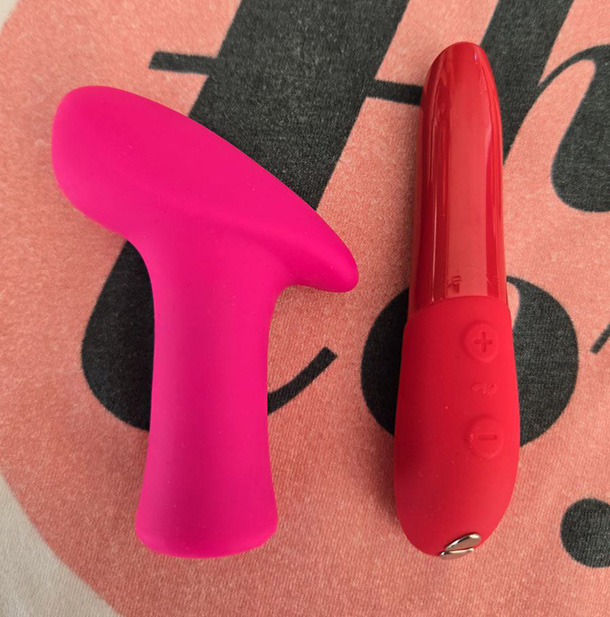
This is the comparison most people are actually making, and it matters because these toys solve different problems with similar confidence.
The Tango X is the rumbliness champion. Its median frequency sits at 50 Hz — every setting, from gentle to intense, carries that deeper, heavier vibration character. If your body specifically craves vibration that sinks into tissue rather than skating across it, and you want that quality maintained at high power, the Tango X delivers it with more consistency than the Ambi. Its narrower 0.69-inch flat tip is also significantly more precise — a laser versus the Ambi’s slightly broader spotlight.
But the Tango X’s precision is also its limitation. That narrow, firm tip demands more exact placement. The positional forgiveness is lower. During partnered sex, the Tango X’s straight-cylinder shape doesn’t angle away from a partner’s body the way the Ambi does. And the Tango X doesn’t have app control with the depth and reliability of Lovense’s ecosystem.
The Ambi wins on versatility, partnered-sex fit, app integration, and broader contact comfort. The Tango X wins on rumbliness, pinpoint precision, and battery life. Neither is universally better. They reward different bodies and different use patterns.
Quick choice: Ambi for rotation, app control, and partnered use. Tango X for deeper rumble and exact placement.
Against the We-Vibe Touch X and the BMS Swan Maximum
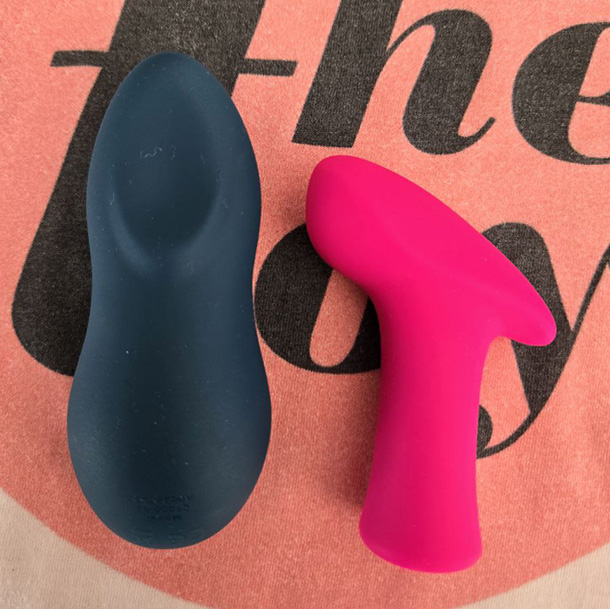
The Touch X offers broader, more cushioned stimulation in a slightly different form factor — more of a mini-wand than a bullet. It scored higher on comfort (8.8 vs. 8.4) and comparable on rumbliness. If your primary need is relaxed, forgiving, broad-contact solo stimulation, the Touch X might edge the Ambi out. It doesn’t match the Ambi’s partnered-sex profile or app depth, though.
The Swan Maximum is for raw power seekers — it scored a 10 out of 10 on maximum power and a 9.3 on range. If your body needs significantly more intensity than what most bullets provide, the Swan Maximum goes places the Ambi can’t reach. The trade-off is comfort: the Swan is tiny and harder to grip, and its vibrations lean moderately buzzy. It’s a specialist, not a generalist.
Quick choice: Touch X for softer broad contact. Swan Maximum for raw intensity. Ambi for the middle path: strong, adjustable, and more versatile than either.
| Ambi | Tango X | Touch X | Swan Max | |
|---|---|---|---|---|
| Max Power | 8.3 | 7.9 | 7.9 | 10.0 |
| Power Range | 8.5 | 8.0 | 8.4 | 9.3 |
| Rumbliness | 7.7 | 9.5 | 7.8 | 6.1 |
| Use During Sex | 9.8 | 9.5 | 9.5 | 10.0 |
| Median Freq | 72 Hz | 50 Hz | 69 Hz | 91 Hz |
| Head Width | 1.04″ | 0.69″ | — | — |
| Noise (high) | 46.9 dB | — | — | — |
The Ambi’s column tells a clear story: it’s not the best at any single metric, but it’s competitive across nearly all of them. That breadth is its actual advantage.
Who I’d Recommend It To
This is the section I’d read first if you are tired of buying bullets that only do one thing well. The Ambi is for people who want options: more angles, more intensity control, more ways to make the same toy feel different.
People who want one bullet that adapts. If you don’t know yet whether you prefer broad or pinpoint, rumbly or buzzy, direct or indirect — or if your preferences shift between sessions — the Ambi gives you more room to experiment than almost any other bullet.
People who use vibrators during partnered sex regularly. The angled shape isn’t a novelty. It’s the single most practical design improvement I’ve encountered for fitting a bullet between two bodies. If you’ve ever abandoned a vibrator mid-sex because it was in the way, the Ambi directly addresses that frustration.
A lot of partnered-vibrator failure is really a geometry problem in disguise — where the handle goes, how much space two bodies leave, and whether the toy can stay in contact without turning the whole moment into troubleshooting. Using a vibrator with a partner gets much easier once the shape is working with you instead of against you.
People who want app control that actually works. If long-distance play, custom patterns, or partner-controlled vibration are important to you, Lovense’s app earns this recommendation on its own. The connectivity is the most reliable in the category, and the feature set is the deepest.
People whose tissue gets overwhelmed by narrow bullets. The 1.04-inch head width and three-zone rotation provide more buffering and more contact options than thin cylindrical bullets. If narrow tips feel like being poked, the Ambi’s rounded head may solve that problem without sacrificing usable intensity.
Sensitive users who need a genuinely gentle starting point. The lowest app setting runs at approximately 1.5 out of 10 — soft enough to use as a genuine warm-up through fabric or beside the clitoris. The continuous slider means you control exactly how fast the intensity builds, with no forced jumps.
Who Should Probably Skip It
The Ambi is adaptable, but it is not a specialist. If your body already knows exactly what it wants, one of these dealbreakers may matter more than the Ambi’s flexibility.
People who need strong rumbliness at high intensity. The Ambi’s rumbly settings are its gentler ones. If you want that deep, body-filling vibration character maintained at powerful levels, the We-Vibe Tango X is the more direct answer.
People who want maximum battery life. Fifty-five minutes on high isn’t enough for everyone, and if extended sessions at higher power are your norm, you’ll find yourself mid-session with a dying toy more often than you’d like.
People who refuse to use a phone app. The Ambi is a good bullet without the app. It’s an excellent bullet with it. But the gap between those two experiences is larger than it should be, because the button alone only gives you three presets and no fine control. If app dependency bothers you on principle, you’ll be paying for capability you won’t use.
People who want extreme pinpoint precision. The Ambi can do focused stimulation via the tapered tip, but it’s broader by design. For tight, defined targeting, the Tango X or the Je Joue Classic Bullet with its finger strap offer more control over exact placement.
Practical Care
Ownership is easy except for two things: the battery is not generous at high power, and the button can turn on in a bag because there is no travel lock.
Cleaning: IPX7 waterproof and genuinely tested — you can submerge it, scrub it with mild unscented soap and warm water, rinse thoroughly, and dry completely. The seamless silicone body has no crevices or texture traps where residue hides. Quick, easy, no complaints. Use water-based lube only. Silicone-based lube degrades silicone surfaces over time.
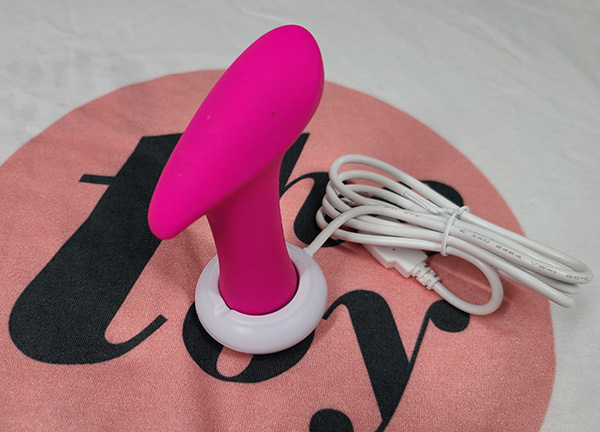
Charging: The updated magnetic dock is a meaningful improvement over the original magnetic clip, which had a reputation for not staying attached. The dock holds reliably, charges in roughly 70 minutes, and shows a solid red light while charging that turns off when full. Don’t leave it plugged in overnight habitually — lithium batteries prefer not to be overcharged. If you have the older clip version and it’s driving you mad, check with Lovense support about the dock replacement.
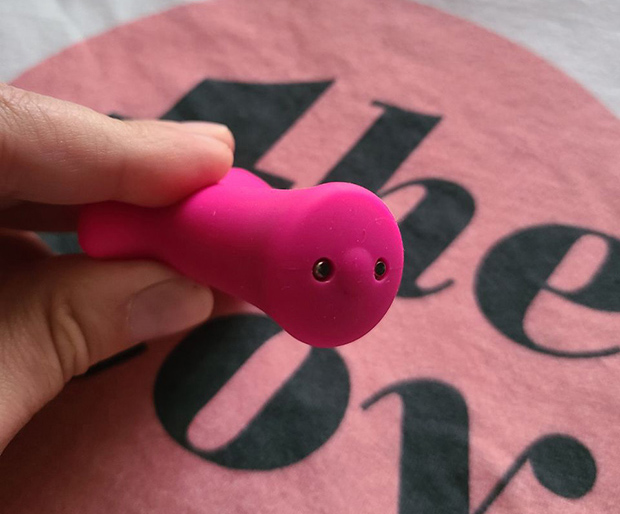
Storage: Silicone collects lint like it’s being paid to. Use the included satin pouch. Store it dry, away from extreme temperatures, and not touching other silicone toys (silicone-on-silicone contact can degrade both surfaces over time).
Travel: At 3.3 inches and 59 grams, it’s one of the most travel-friendly vibrators I own. No dedicated travel lock, though — the button can be accidentally pressed in a bag. Store it in the pouch and tuck it somewhere the button won’t get pushed. Charge it before you leave, because the battery drains slowly even when the toy is off (several users confirmed this, and I noticed it too — leave it uncharged in a drawer for two weeks and you’ll need to top it off).
Tips I Learned the Hard Way
These tips matter because the Ambi changes more through angle and setting choice than most bullets. If it feels slightly wrong, rotate it before you decide it needs more power.
- Start at mid-range, not minimum or maximum. The mid setting has the best motor isolation, the cleanest balance between depth and surface engagement, and the widest comfort window. Maximum is for when you know you want it. Minimum is for warm-up through fabric, not for judging the toy’s capability.
- Rotate before you increase power. When the sensation feels like it needs “more,” try switching from the broad head to the thin edge (or back) before reaching for the intensity slider. A shape change often solves what a power increase can’t.
- Customize your three button presets before you need them. Open the app once, set your preferred low/mid/high levels, and then you can use the Ambi button-only for most sessions without fumbling with your phone.
- Lube matters even for external use. A drop of water-based lube between the silicone head and your skin eliminates the slight drag that dry silicone creates. The vibration glides instead of gripping, and sensitivity lasts longer because friction isn’t quietly irritating the tissue.
- Let it rest against you. The Ambi’s broader head is designed to sit in place and let vibration travel, not to be constantly repositioned. Find the spot, nestle it, and let the motor do its work. Moving it around resets the arousal buildup every time.
- Don’t judge it by level one in your hand. The handle buzzes most at the lowest setting. That first-impression hand-buzz doesn’t represent how the toy feels against the body at the settings you’ll actually use.
Final Verdict
The Lovense Ambi doesn’t try to be the most powerful bullet, the most rumbly bullet, or the most precise bullet. It tries to be the most adaptable one — and that’s a harder engineering problem to solve than just cramming in a bigger motor.
What makes it work isn’t any single spec. It’s the interaction between the asymmetric head geometry, the silicone filtering, the motor’s shifting frequency character across the power range, and the continuous app-controlled intensity ramp. Those pieces together create a toy that can genuinely feel different depending on how you orient it, where you place it, what setting you choose, and whether your body needs depth or surface energy in that particular moment.
It won’t suit everyone. If your body has a specific, consistent need — strong rumbliness, extreme power, narrow precision — a specialist toy will outperform it. But a lot of bodies don’t have one fixed preference. Arousal shifts. Sensitivity fluctuates. What worked Tuesday doesn’t always work Thursday. For that kind of nervous system, the Ambi’s ability to shift modes without shifting toys is a practical advantage that most bullets don’t offer.
That is the real buying decision: do you want the most extreme bullet, or do you want a bullet that gives you more ways to find the right sensation?
The thing I keep coming back to: the mid-range is the star. Not the maximum, not the lowest whisper. The middle of the power range, where the motor isolation improves, the frequency balance sits between rumbly and buzzy, and the displacement is strong enough to reach into tissue without the surface buzz that creeps in at the top. If you buy the Ambi and find yourself reaching for maximum every time, try backing off. Give the mid-register a full session. You might find the toy you were looking for was always two settings below where you were searching.
Final shortcut: choose the Ambi if you want shape-shifting versatility, app precision, and strong mid-range stimulation. Skip it if you want high-power rumble, long battery life, or a bullet that does not depend on an app to feel fully unlocked.
| Design: | (5.0 / 5) |
| Comfort: | (4.5 / 5) |
| Power: | (5.0 / 5) |
| Experience: | (5.0 / 5) |
| Controls: | (5.0 / 5) |
| Value: | (4.5 / 5) |
The Lovense Ambi is the bullet I’d choose when one fixed sensation is not enough: broad, focused, app-tunable, and strongest in its mid-range rather than at the top.
You can buy this bullet toy here:
What to read next
If you want to understand where all these numbers came from and how I translate them into actual body-level experience, read how I test bullet vibrators. It explains what I’m measuring, what those measurements do and do not predict, and why two toys with similar specs can feel completely different in the body.
If you’re still deciding between this and other compact options, my best bullet vibrator guide is the next stop. That’s where I break down which bullets actually suit different bodies, sensitivity patterns, and stimulation preferences instead of pretending one tiny toy fits everyone.
Sources Reviewed
- Herbenick, D., et al. “Women’s Experiences With Genital Touching, Sexual Pleasure, and Orgasm: Results From a U.S. Probability Sample.” Journal of Sex & Marital Therapy, 2018.
- O’Connell, H.E., et al. “Anatomy of the Clitoris.” The Journal of Urology, 2005.
- Herbenick, D., et al. “Women’s Sexual Satisfaction, Communication, and Reasons for (No Longer) Faking Orgasm.” Journal of Sex & Marital Therapy, 2019.
If there’s something you’re still wondering about that I didn’t cover here, leave a comment and I’ll do my best to help.
Add comment