
 Amie Dawson, Ph.D.
The first time I turned the Lovense Exomoon to maximum, I almost shelved it. Not because nothing was happening — plenty was — but most of it was happening in my fingers. The motor buzzed louder in my hand than it did against the tissue I’d pointed it at, the sensation at the tip had narrowed into something tighter and less interesting than what I’d felt thirty seconds earlier, and my immediate thought was: this is fine. It’s a pretty lipstick tube with a mediocre bullet inside.
Then I dialed it back to mid-range. And the toy changed.
Smooth. Low. A rolling vibration that didn’t skim across the surface but actually settled into the tissue beneath it. The oscilloscope confirmed what my body already knew: the waveform at medium speed runs as a clean sine — almost textbook efficient — while minimum is gritty and maximum tightens until the handle takes over. The sweet spot on this bullet isn’t at the top. It’s in the middle, and that single fact changes everything about how you should use it, who it works for, and whether the price makes sense.
Quick read: The Exomoon is not a “turn it up and win” bullet. It works best when you stop chasing maximum and use the app to stay in the smooth 40–60% range.
Quick verdict
| Design: |  (4.0 / 5) (4.0 / 5) |
| Comfort: |  (3.0 / 5) (3.0 / 5) |
| Power: | (3.0 / 5) |
| Experience: | (4.0 / 5) |
| Controls: |  (5.0 / 5) (5.0 / 5) |
| Value: | (4.0 / 5) |
Overall rating: 3.8 out of 5, based on design, comfort, power, experience, controls, and value.
The Lovense Exomoon is a discreet, app-connected lipstick bullet with a genuinely rumbly mid-range — but its handle buzz and moderate power ceiling keep it from being a true intensity toy.
You can buy this bullet toy here:
The Lovense Exomoon is a rumbly, quiet lipstick bullet with the best app control in the category and genuine travel discretion. It delivers its most satisfying vibration in the mid-range — smooth, low-frequency, deeper than most bullets this size. It doesn’t deliver the high-intensity ceiling that the sales page implies, and it sends more vibration into your hand than any other bullet I’ve measured.
The buying decision: choose the Exomoon for rumble quality, app control, and discretion. Skip it if your body needs strong tip power or your hand gets tired easily.
Buy it if you want a truly discreet, app-connected bullet with genuine rumble and you don’t need extreme power. Skip it if you’re chasing intensity, can’t tolerate hand buzz, or primarily want a bullet for use during sex.
Current price: $79 (perpetually “discounted” from $149 — treat $79 as the real number) Most relevant competitor: We-Vibe Tango X (~$95, no app, stronger, rumblier, better tip isolation, hard plastic) Sensation profile: Rumbly and moderate-depth through the mid-range. Pinpoint tip geometry with angle versatility. Noticeable hand fatigue at upper speeds. Best as a slow-build, app-driven tool — not a power play. Best for: Moderate-sensitivity users who value rumble quality, app control, and discretion over raw force.
Marketing vs. reality: 60/100
Verdict: Earns the disguise, oversells the punch
The Exomoon’s sales page leads with “Tiny. Discreet. Powerful.” and describes it as “Super Powerful” with “amazing power for intense vibration seekers.” Two of those headline words are fully earned — it’s genuinely tiny, and the lipstick disguise is more convincing than any competitor I’ve tested. But “super powerful” and “intense vibration seekers” set expectations the motor can’t match.
The measured maximum output sits at moderate intensity, and effective power drops further under body pressure because the chassis sends more displacement into the handle than the tip. The real selling point — a rumbly, clean vibration character that peaks at mid-speed — goes completely unmentioned in the copy. The app features, waterproofing, and discretion claims all hold up. The intensity framing doesn’t, and it’s the claim most likely to drive a purchase decision in the wrong direction.
Reader translation: Lovense sells the Exomoon as powerful. The better claim would be smoother, rumblier, quieter, and more discreet than most bullets its size.
What it is
The Lovense Exomoon is a Bluetooth-enabled, app-controlled lipstick bullet vibrator designed for external stimulation — primarily clitoral, but marketed for nipples and erogenous teasing too. It’s one of two bullets in the Lovense lineup; the other is the Lovense Ambi, which is stronger and buzzier.
| Spec | Detail |
|---|---|
| Weight | 32 g (measured) |
| Length | 8.5 cm |
| Tip material | Silicone, Shore A 45 (medium-firm) |
| Body | ABS plastic |
| On-toy controls | 3 steady speeds, 4 patterns |
| App controls | 20 intensity levels, unlimited custom patterns, music sync, sound activation, long-distance partner control |
| Battery | ~85 min on high; up to ~3 hours at lower settings |
| Noise | 26–29 dB at 60 cm (measured in a 23 dB room) |
| Waterproof | IPX7 (fully submersible) |
| Charging | Magnetic USB, ~1.5–2 hours |
| Warranty | 1 year |
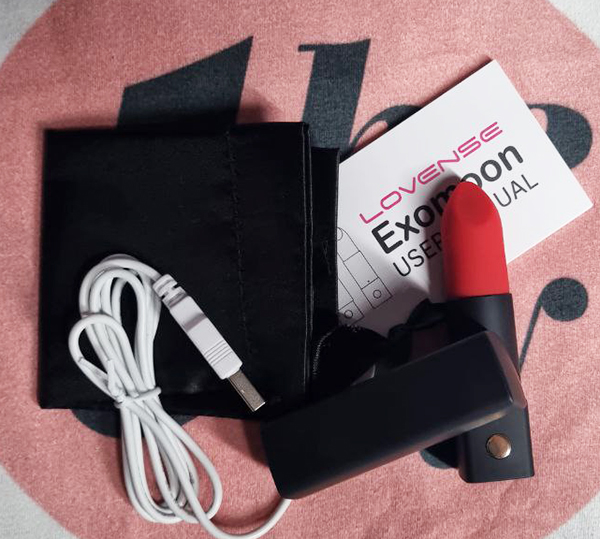
In the box: Vibrator, magnetic USB charging cable, user manual, satin storage pouch.
What it feels like in the body
The tip material and what it does to the motor’s character
The silicone tip measures Shore A 45 on the durometer — medium-firm. It sits between the squishy give of the We-Vibe Touch X (Shore A 24, which absorbs motor detail and softens everything) and the zero-forgiveness hard plastic of the We-Vibe Tango X (Shore A 99, which transmits every harmonic edge directly into tissue). What this means against your body: you feel the actual vibration quality without the sharpest mechanical peaks. On sensitive tissue — particularly the clitoral glans during direct contact — hard plastic can feel precise but punishing. Ultra-soft silicone can feel gentle but muffled. Shore A 45 lets the signal through while rounding off the harshest edges.
That middle firmness is doing more work than it sounds. Firmness changes what a vibrator feels like just as much as power does — how direct the contact lands, how forgiving it is on sensitive tissue, and how much of the motor’s texture actually reaches you.
The lipstick-angled tip gives you two distinct contact options from the same toy. The pointed tip concentrates stimulation on a contact area smaller than most bullets I’ve measured — about 0.71 inches across. Rotate the toy, and the flat angled face widens the contact patch and spreads the pressure across more surface area. These aren’t just different angles; they’re different nervous system experiences. Focused contact concentrates intensity on a smaller cluster of nerve endings. Broader contact distributes the load, reduces perceived sharpness, and lets the vibration work a wider area of the vulva at gentler apparent strength. I found the flat face better for the first several minutes, switching to the tip only once arousal had shifted the tissue enough that pinpoint felt engaging rather than abrupt.
This feels like: the flat face gives you a softer landing; the point gives you a clearer target once your body is ready for more direct contact.
Speed by speed: where the motor runs clean and where it doesn’t
I measured the Exomoon’s vibration output at the tip and handle at each speed setting with a laser vibrometer — acceleration (the force of each vibration pulse), velocity (how fast the surface moves), and displacement (how far the motor physically swings during each cycle, which is the strongest predictor of whether you’ll feel vibration pooling into tissue or skimming across the surface).
Speed 1 — the gritty warm-up
| Acceleration (g) | Velocity (mm/s) | Displacement (mm) | |
|---|---|---|---|
| Tip | 10 | 14 | 0.08 |
| Handle | 6 | 14 | 0.15 |
The oscilloscope at this setting shows a complex, messy waveform — the motor hasn’t reached its efficient RPM yet. What you feel at the tip is a medium-light vibration with a textured grain. The Shore A 45 silicone rounds off the worst of it, but there’s a roughness, a scattered quality, that reads as “buzzy” even though the operating frequency is technically low. Messy harmonics scatter the sensation instead of organizing it.
The handle is already telling you something: at 0.15 mm displacement versus 0.08 mm at the tip, your fingers are receiving nearly twice the physical movement that the contact point is delivering to your body. This isn’t a max-speed problem. It’s a design constant, and it starts from the first setting.
Through underwear, this speed works for a slow warm-up. The fabric diffuses the grain into something softer, and the low absolute power means you’re not missing much by starting here. But if you’re holding the toy bare-skin on the clit and expecting something refined, this setting will feel preliminary and slightly rough.
Practical translation: speed 1 is best as a fabric warm-up. Bare skin makes the grit more obvious.
Speed 2 — the mid-range sweet spot
| Acceleration (g) | Velocity (mm/s) | Displacement (mm) | |
|---|---|---|---|
| Tip | 15 | 20 | 0.09 |
| Handle | 10 | 20 | 0.20 |
This is where the Exomoon earns its reputation.
The oscilloscope at mid-speed shows a clean sine wave. The messy harmonics disappear. The motor has found its efficient RPM, and the difference is immediate — the vibration smooths out into something rounder, deeper, and more organized. Instead of scattered surface noise, you get a single rolling frequency that your nervous system can actually track. There’s strong research showing that preferred clitoral touch varies enormously in rhythm, pressure, and pattern, but one consistent finding is that organized, rhythmic stimulation tends to support arousal more effectively than chaotic input. This is the setting where the Exomoon becomes rhythmic and consistent instead of scattered and mechanical.
Tip displacement only rises from 0.08 to 0.09 mm, but the sensation reads as meaningfully stronger because the clean waveform delivers its energy more efficiently. Less is wasted on harmonic noise. The frequency analysis confirms it: the 2–5 kHz range — the frequency band that feels most “buzzy” and most likely to fatigue nerve endings over time — drops into a valley, while the lower frequencies dominate. The vibration pools instead of scattering. It sits deeper than a surface skim, reaching past the skin rather than dancing on top of it.
That is the difference people are usually trying to describe when they say a toy feels “deep” instead of “zingy” and do not have better language for it. Rumbly versus buzzy vibration is not marketing fluff. It is often the difference between a signal that gathers in the body and one that just skitters across the surface.
The complication that doesn’t go away: the handle at this speed hits 0.20 mm displacement, more than double the tip’s 0.09 mm. Your hand is still receiving more movement than the body contact point. But because the waveform is clean, the hand buzz feels like a steady hum rather than a chaotic rattle, and your attention can stay more easily on what matters.
The Exomoon’s best setting is not its strongest setting
My lab read: The Exomoon runs cleanest in the middle. At speed 2, the oscilloscope shows a smooth sine wave, the buzzy high-frequency clutter drops away, and the vibration feels more organized even though tip displacement only rises slightly from 0.08mm to 0.09mm.
That is the part the sales page misses. This isn’t a “turn it up and win” bullet. Minimum feels gritty because the motor hasn’t settled into its efficient rhythm yet. Maximum feels stronger, but tighter and more hand-heavy. The good stuff lives around 40–60% in the app.
Why this matters in a body: A clean mid-range signal feels deeper than the numbers alone suggest. It gives the nervous system something steady to follow instead of scattering sensation across the surface. For slow build, arousal pacing, and avoiding that sharp overcooked buzz, the middle is the point.
Speed 3 — louder, sharper, more in your hand
| Acceleration (g) | Velocity (mm/s) | Displacement (mm) | |
|---|---|---|---|
| Tip | 20 | 25 | 0.12 |
| Handle | 22 | 36 | 0.24 |
The motor pushes hard here. The waveform stays clean but tightens — more focused per cycle, less of the relaxed sweep you felt at mid-speed. Acceleration jumps from 15g to 20g at the tip, meaning each vibration pulse lands with more individual definition. Velocity increases. Displacement reaches its highest at 0.12 mm. The sensation shifts: more urgent, more concentrated, less “rolling wave” and more “insistent pressure buzz.” The broader, gathered quality of mid-speed narrows into something more direct and more demanding.
And then there’s the hand.
At maximum, the handle hits 22g acceleration, 36 mm/s velocity, and 0.24 mm displacement. The tip: 20g, 25 mm/s, 0.12 mm. The handle now exceeds the tip in all three dimensions. You are feeling more vibration in your fingers than at the contact point on your body.
I measured this ratio across every bullet in my current testing set:
| Toy (at max) | Tip displacement | Handle displacement | Ratio |
|---|---|---|---|
| We-Vibe Touch X | 0.19 mm | 0.03 mm | 6.3× (tip) |
| Le Wand Bullet | 0.11 mm | 0.02 mm | 5.5× (tip) |
| Lelo Lily 3 | 0.15 mm | 0.03 mm | 5.0× (tip) |
| Lovense Ambi | 0.36 mm | 0.09 mm | 4.0× (tip) |
| We-Vibe Tango X | 0.16 mm | 0.14 mm | 1.1× (tip) |
| Lovense Exomoon | 0.12 mm | 0.24 mm | 0.5× (handle wins) |
The Exomoon sends more vibration into your hand than into the tip
My lab read: At maximum, the Exomoon measures 0.12mm displacement at the tip and 0.24mm at the handle. The handle also beats the tip on acceleration and velocity. In plain language: your fingers are getting more of the motor than your clit is.
That is not just “a little hand buzz.” It is an inverted energy path. Every other bullet in my current set sends more displacement to the contact point than the handle. The Exomoon is the outlier where the handle wins.
Why this matters in a body: This is why full power can feel strangely disappointing. The toy sounds and feels busy, but too much of that busyness is happening in your grip. After a few minutes, your fingers start competing with your body for attention, and the tip feels less effective than the motor noise suggests.
A ratio above 1.0 means more energy reaches the tip than the handle. The Exomoon is the only bullet I’ve tested where that ratio inverts — where the handle carries more energy than the contact point at maximum speed. This is why one user described the toy as losing most of its perceived power when pressed against skin. The motor isn’t failing. It’s sending its energy the wrong direction.
Five minutes at maximum with a firm grip and your fingers will fatigue. The hand goes a little numb, your fine motor control loosens, and you start thinking about the discomfort in your grip rather than the sensation at the tip. If you have any hand sensitivity, joint stiffness, or grip challenges, this setting becomes actively unpleasant to hold.
The practical takeaway: treat maximum as a short burst to push past a threshold, not a cruising speed. The quality of stimulation narrows at the top while the physical cost in your hand spikes.
Skip max as your default if: hand buzz pulls you out of arousal, your fingers numb easily, or you need steady pressure for more than a minute or two.
How it performed in real use
The session that changed my assessment
I’d already written my initial notes, and they weren’t generous. Then one evening — tired, not particularly warmed up, skeptical — I opened the Lovense app, set the Float level to around 50%, and pressed the flat face of the tip against my clitoral hood through thin cotton underwear.
The vibration was smooth and unhurried. The fabric softened the contact just enough that the silicone tip didn’t feel pinpoint, and the clean mid-speed waveform delivered a steady, organized sensation that didn’t require me to be aroused for it to feel good. This was stimulation that could create arousal rather than demanding it as a prerequisite. I stayed at that level for maybe four minutes, then switched to bare skin and rotated the tip so the sharper edge made direct contact. The shift was immediate — more definition, more specificity, more urgency — without changing the speed at all.
I came on that setting. Slowly, with a gathering quality that felt earned. And my hand didn’t hurt afterward. The Exomoon’s real personality had been hiding behind a maximum setting I never should have started with.
Use lesson: if the Exomoon feels mediocre at full power, lower it before you dismiss it. The cleaner sensation lives below the ceiling.
The max-speed experiment
Wanting to test the motor under realistic conditions, I started a different session already warmed up and went straight to full power. For about ninety seconds the increased intensity felt like exactly the escalation I wanted — sharper, more urgent, more defined per pulse. Then my attention started drifting to my hand. The rattle in my fingers became harder to ignore. The stimulation at the tip still registered as strong, but thinner — more concentrated, less enveloping than mid-speed had been. By five minutes, I was gripping harder to hold the angle, my hand buzzing enough that I was thinking about my grip instead of about sensation. I backed down to 60% and the experience immediately opened up — wider, smoother, easier to settle into. That’s a pattern I’m not used to with bullets. Usually more power means more result. Here, more power meant more hand and less body.
Controls, connectivity, and the app that earns the price
The single gold button is slightly raised from the plastic body — findable by touch, even in the dark. Press-and-hold for three seconds to power on; short press to cycle. Simple and reliable. But without the app, you get three steady speeds and four patterns in a one-direction cycle. Overshoot your setting and you’re pressing through every remaining option to get back. In the dark, with slippery fingers, mid-orgasm, that’s more frustrating than it sounds.
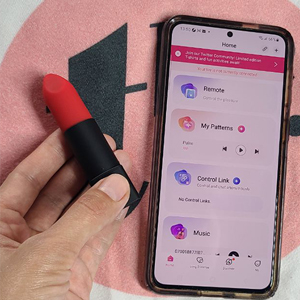
The Lovense app transforms the experience. The Float function — one tap to set a constant level anywhere from 1 to 20 — is how I found the sweet spot. The Loop function lets you draw a vibration pattern with your finger and repeat it. The rolling undulation I created between 45% and 60% became my default. The music sync (requires locally stored songs — Spotify compatibility died in 2022) actually works; electronic tracks with clear bass lines produce a constantly shifting pattern that surprised me. The community pattern library is a mixed bag — some genuinely good, most forgettable — but the ability to save and customize is useful, and the interface is clean.
One small software quirk worth noting: lock your phone screen during a running Loop pattern and the pattern drifts. The toy keeps vibrating, but it stops playing back what you drew. This doesn’t happen with Float or preset patterns. It’s minor, but it interrupts the single feature that made the biggest difference in my sessions.
Lovense’s Bluetooth connectivity is, plainly, the most reliable I’ve tested. Initial pairing takes under twenty seconds. After that, the Exomoon connects automatically when the app opens. Disconnections during use are rare. Long-distance control — tested with a partner over the internet — maintained steady contact with responsive feedback. Your partner sees the vibration pattern on their screen during video chat, a thoughtful detail that most competitor apps don’t offer. If you’re buying this primarily for long-distance play, the connectivity alone justifies choosing the Exomoon over anything else in this form factor.
This matters if: app control is not a bonus for you but the whole reason to buy. The Exomoon is a better connected toy than it is a pure power bullet.
Where the length becomes a problem
During missionary, the Exomoon’s 8.5 cm length doesn’t give your fingers enough room. The tapered tip requires you to angle the base away from your body to keep the flat face against your clit, and that angle gets crowded when a partner’s pelvis is pressing into yours. I kept losing consistent contact or jabbing myself with the narrow tip at a wrong angle. Spooning was better — more space, easier to hold position. But in any facing position, the short body means your grip is cramped and compromised. The Lovense Ambi handles partnered use better; its angled head tucks between bodies more naturally. If you’re buying specifically for use during sex, the Exomoon isn’t the strongest choice.
Noise: measured and heard
In standardized testing at 60 cm in a 23 dB ambient room, the Exomoon measured 26 dB at minimum and 29 dB at maximum — one of the quieter bullets in my comparison set, similar to the Tango X (25–29 dB) and quieter at the top end than the Touch X (32 dB). Other reviewers have measured higher numbers using phone apps or smartwatches at closer distances; the practical answer is the same across all of us: it’s inaudible through a closed door at any speed, and under blankets it disappears entirely. The pitch character helps — the mid-speed hum is low and steady, not the thin, whiny tone that some compact motors produce. At maximum, some broadband mechanical texture fills in, but it doesn’t carry.
The lipstick test
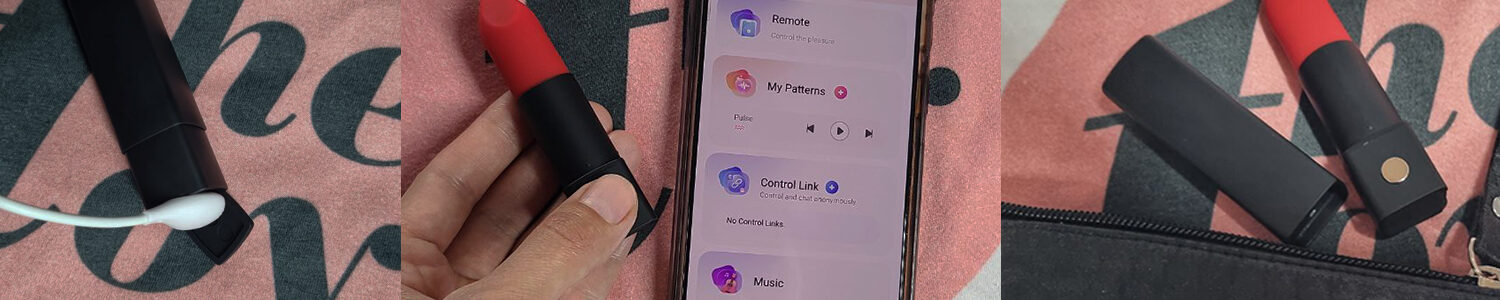
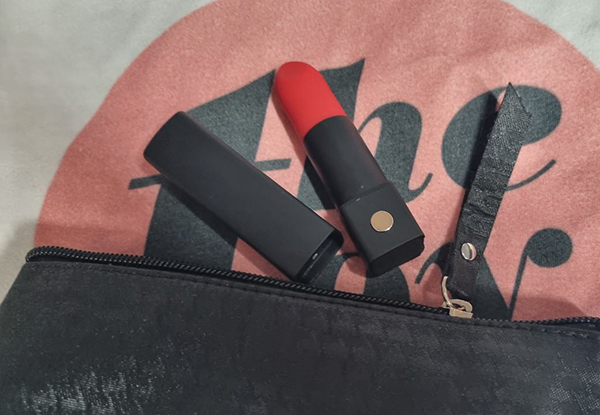
I’ve carried this in a jacket pocket, a cosmetics bag, and a weekender. With the cap on, it reads as a slightly chunky matte-black lipstick with gold trim. I left it on a bathroom counter next to actual makeup and nobody noticed. You’d need to pop the cap and clock the red silicone tip to identify it. The sales page leans hard on this disguise, and it earns it — this isn’t a gimmick.
What the Exomoon actually solves
It fills a gap that no other single bullet covers: genuine rumbliness, best-in-class app control, and real travel discretion in one package.
The rumbliness is verified. The operating frequency measured at 35 Hz on low power and 51 Hz median — squarely in “extremely rumbly” territory, comparable to the Tango X (50 Hz median) and significantly lower than the Ambi (72 Hz). Low-frequency vibration travels deeper into tissue and tends to sustain sensation longer before causing the progressive numbness that higher-frequency surface buzz can trigger over extended use. For bodies that respond best to slower, heavier vibration rather than quick surface zing, this motor character matters.
The intensity ramp through the app is also unusually useful. Twenty gradual steps between gentle and moderate — with tiny, comfortable increments — give you room to dial in a narrow effective range instead of jumping past it. A lot of people need to find and hold a specific intensity window during arousal buildup; a toy that lurches between “too little” and “too much” makes that harder. The Exomoon, through the app, makes it easier.
And the long-distance function: for couples separated by geography, this is the most reliable connected bullet available. The combination of stable Bluetooth, intuitive partner controls, video chat overlay, and responsive long-distance operation isn’t matched by any competitor in this form factor.
Where it falls short
The drawbacks all point in the same direction: the Exomoon is beautifully discreet and app-smart, but its motor energy does not stay focused at the tip.
The handle vibration isn’t a quirk. It’s a design limitation present at every speed and most pronounced at maximum. The handle displacement exceeds the tip displacement at all three measured settings. At max, the handle carries more acceleration, more velocity, and exactly double the displacement of the contact point. In practice, this means the toy delivers less effective power to your body than it delivers to your hand, the sensation at the tip weakens when you press firmly into tissue, and extended high-speed use becomes a grip endurance exercise. The Lovense Ambi — same brand, same price range — has a 4.0× tip-to-handle ratio. The Exomoon has a 0.5× ratio. That gap isn’t subtle, and the fact that the sales page describes this as a toy for “intense vibration seekers” while the chassis is bleeding energy into the wrong end is the most frustrating mismatch between marketing and engineering in this review.
The power ceiling is moderate. Multiple independent measurements place the max intensity around 5.4 to 6.8 on a 10-point comparative scale. Enough for many people — I orgasmed reliably — but if your threshold is higher, if you’re on medication that raises arousal barriers, or if you just need a bullet that can push hard when you need it to, this motor won’t get you there. The Ambi, the Tango X, and the BMS Swan Maximum all reach significantly higher.
Button durability has a documented weak point. One user experienced the same button failure on two separate units within a year — the mechanism broke or jammed in a way that bricked the toy. A repeated identical failure on a warranty replacement points toward a design vulnerability. With a single-button toy, that button is the only point of mechanical interaction; if it breaks, there’s no workaround. Lovense’s 1-year warranty covers you once. Whether it covers you long enough is an open question.
No travel lock. The toy whose entire identity is “toss it in your bag” has no way to prevent accidental activation during transit. I check that it’s off every time I pack it. You shouldn’t have to.
Three on-toy speeds isn’t enough. Without the app, you get jumps of roughly 25%, 60%, and 100% intensity — and the sweet spot where this motor actually sounds and feels its best lives in the gap between those presets. If you don’t want to use your phone, you’re missing the best version of this product.
What surprised me / What annoyed me
Surprised me:
- Mid-speed felt measurably and experientially better than maximum — smoother, deeper, more effective for building toward orgasm
- The lipstick disguise is genuinely convincing, not a marketing reach
- The app’s Loop pattern function changed how I use this toy entirely — rolling waves at 45–60% are better than any steady setting
- Through thin cotton underwear produced a more comfortable, more relaxed build than bare skin at lower intensities. With this toy, that is not a compromise technique. It is often the smarter first move. Using a vibrator over underwear takes the point off the contact without erasing the low-frequency motor character that makes the Exomoon interesting in the first place.
Annoyed me:
- My fingers knew more about what the motor was doing than my clit did at max speed
- “Super Powerful” marketing for a moderate-intensity toy with an inverted isolation ratio
- No travel lock on a design built around travel
- The Loop pattern drifts when you lock your phone screen
- Button cycling only goes one direction — overshoot and you’re visiting every setting on the way back around
What $79 buys and what it doesn’t
At $79 (ignore the $149 “original” price; Lovense runs perpetual discounts, so this is the real number), you’re paying for three things: the app ecosystem, the rumble quality, and the disguise.
The app ecosystem is genuinely worth something. No other bullet at this price connects this reliably, offers this much control granularity, or handles long-distance play this smoothly. If partner control across distance matters to you, that alone justifies choosing this over a non-connected bullet.
The rumble quality at mid-speed is real and uncommon in this form factor. You’re getting a motor frequency profile that competes with the Tango X in a package that connects to your phone and fits in a cosmetics bag.
What $79 doesn’t buy: high intensity, good vibration isolation, long-term build confidence beyond the warranty window, or a toy that works at its best without pulling out your phone. The We-Vibe Tango X at ~$95 gives you more effective power, dramatically better tip isolation, eight on-toy speeds, and a longer track record — without the app, without the disguise, and with a hard plastic tip that’s less forgiving on sensitive tissue. If budget matters most, the BMS Essential Bullet reportedly delivers more raw intensity for around $25: no app, no disguise, no Bluetooth — but no pretense about what it does, either.
The honest math: if app control and discretion are your top two priorities, $79 is justified. If they aren’t, the Tango X is a better vibrator for $20 more.
Value frame: the Exomoon earns its price as a connected discreet toy, not as the strongest or most efficient bullet.
How it compares
Lovense Exomoon vs. Lovense Ambi
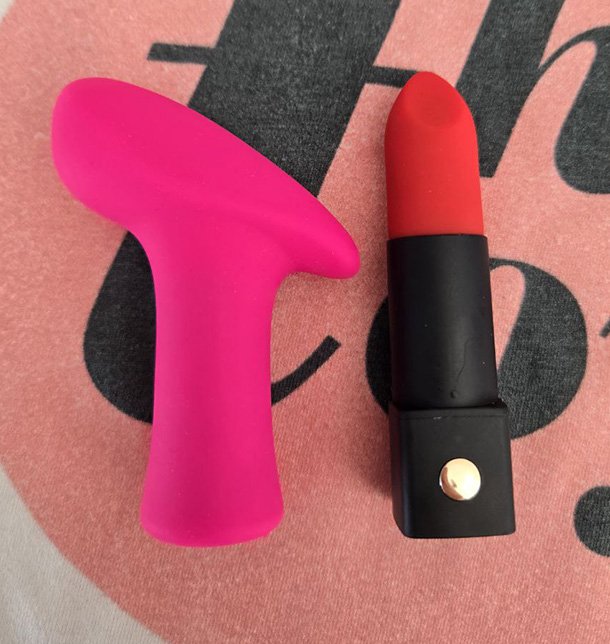
The Ambi delivers 0.36 mm displacement at the tip with 0.09 mm at the handle — a 4.0× ratio that means the motor energy goes where you point it. The Exomoon delivers 0.12 mm at the tip with 0.24 mm at the handle. The Ambi is also stronger (roughly 8 out of 10 max power versus the Exomoon’s 6.8) and its angled head tucks between bodies during sex in a way the Exomoon’s straight profile can’t manage. Same app, same brand, same price tier.
The Exomoon wins on rumbliness — 51 Hz median versus the Ambi’s 72 Hz. If you want a deeper, lower vibration character at gentler intensity, the Exomoon gives you that. If you want more power delivered to the right place with less hand fatigue and easier partnered use, the Ambi is the better tool.
Lovense Exomoon vs. We-Vibe Tango X
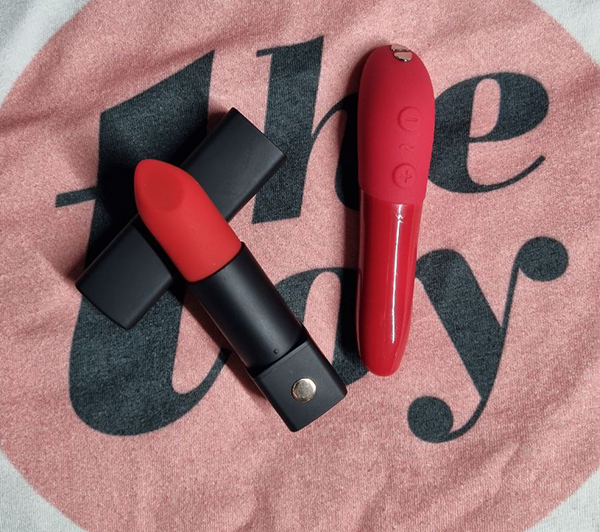
The Tango X remains the benchmark rumbly bullet. Its 50 Hz median frequency is nearly identical to the Exomoon’s 51 Hz, but it delivers more tip displacement (0.16 mm vs 0.12 mm) with a 1.1× isolation ratio versus the Exomoon’s 0.5×. It offers eight on-toy speeds with no app required. Its hard plastic tip transmits every vibration edge directly — precise and potentially aggressive on sensitive tissue, but the signal arrives intact.
The Exomoon wins on app control (the Tango X has none at this price), travel disguise, and tip comfort. The Tango X wins on effective power, isolation, on-toy control variety, and delivering its energy where it’s aimed. The Tango X is the better vibrator. The Exomoon is the better connected, more discreet device with a vibrator attached.
Lovense Exomoon vs. We-Vibe Touch X
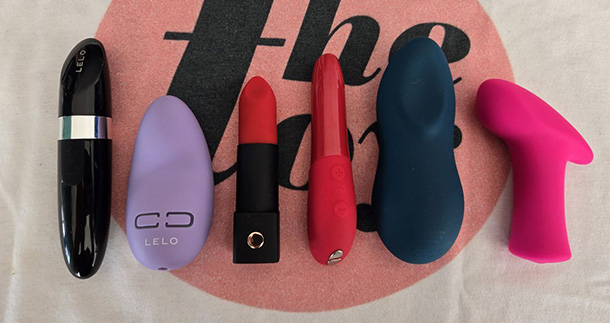
Different category of experience. The Touch X has a wider head, softer silicone (Shore A 24), broader contact, and the best handle isolation I’ve measured at 6.3×. It’s gentler, more diffuse, virtually buzz-free in the hand — and heavier, larger, less discreet, with an app that doesn’t come close to Lovense’s reliability. Broad, cushioned, quiet-handed stimulation versus pinpoint, rumbly, app-driven targeting. Different bodies, different days, different answers.
Who this fits
This is the section I’d read first if you’re tempted by the lipstick design. The Exomoon works best when discretion and app control matter as much as sensation quality.
You want rumbly vibration with real app control, and nothing else in this form factor combines both at this level.
You’re in a long-distance relationship and need a clitoral toy your partner can control reliably. This is the best-connected bullet I’ve found.
You need something you can carry without anyone identifying it. The disguise works.
Your sensitivity is moderate or slightly above, and you respond to low-frequency, rhythmic vibration rather than high-speed surface buzz. The mid-range sweet spot rewards your nervous system specifically.
You like building custom patterns. The app’s Loop function, paired with this motor’s clean mid-range, produces something genuinely worth exploring. And you’re newer to vibrators — the shape is approachable, the starting intensity is gentle, the app is intuitive. Just know you’ll want the app to get the best from it.
Who should look elsewhere
The Exomoon is easy to like for the right use case, but easy to outgrow if you need force. If one of these is your main priority, I’d choose a different bullet first.
You need strong upper-range intensity. The motor doesn’t have it, and the chassis doesn’t help. The Ambi, the Tango X, and the BMS Swan Maximum all deliver more.
You can’t tolerate hand buzz. The Exomoon’s handle vibration is the highest I’ve measured in a bullet. For anyone with hand sensitivity, fatigue conditions, arthritis, or long session habits, the Touch X, Le Wand Bullet, and Lily 3 all isolate dramatically better.
You primarily want a bullet for partnered sex. The short length and straight profile make positioning harder than it needs to be between two bodies. The Ambi’s angle handles this better.
You don’t want to use an app. Three on-toy speeds with one-direction cycling isn’t enough control for a toy whose best performance hides between the presets.
Tips I learned the hard way
These tips matter because the Exomoon changes dramatically with setting, grip, and contact angle. Use it like a max-power bullet and it disappoints. Use it like a mid-range app-controlled rumble tool and it makes much more sense.
Start at 40–60% in the app. Minimum is gritty. Maximum buzzes your hand more than your body. The clean motor character lives between those extremes. If you test this toy only on its on-board presets without the app, you’ll miss what it actually does well.
Use the flat face of the tip first. The point is precise enough to feel abrupt on unaroused tissue. The broader angled surface gives you a gentler landing that lets sensation build before you narrow the focus.
Through fabric first if you’re sensitive. Thin cotton diffuses the vibration just enough to reduce pinpoint sharpness without killing the rumble. The low-frequency character carries through fabric well.
Hold lightly. The harder you grip, the more handle vibration dominates and the more motor energy your hand absorbs instead of reaching your body. Let gravity and body position do some of the work. A relaxed hold actually delivers better stimulation than a tight one.
That part sounds small until you feel how fast it can hijack a session. How you hold a vibrator changes more than hand comfort — it can change how much of the motor your body actually gets to feel.
Build a rolling wave pattern. In the app’s Remote screen, drag your finger gently between 45% and 60% for about thirty seconds, then hit Loop. This undulating rhythm — mid-speed power gently rising and falling — works better with this motor than any steady vibration level I tried.
Living with it: charging, cleaning, storing
Charging: The magnetic USB cable snaps to a port under a rubber cap at the base. The connection holds on a flat surface but won’t survive a nudge — don’t charge on the edge of a nightstand. Full charge takes roughly 1.5 to 2 hours. The button light gives you a vague charge status, but I’ve been caught with a dead battery more than once because I couldn’t tell how much was left. Vibration intensity drops slightly in the last 10–15 minutes of battery life, but it’s gradual enough to ignore until the toy dies.
Battery life: The marketing claims 2.5–3 hours; independent testing on high power measured closer to 85 minutes. At the mid-range where you’ll likely spend most of your time, expect around 2 to 2.5 hours. Reasonable for the form factor.
Cleaning: Fully submersible (IPX7 verified in use — I’ve rinsed it under running water without issue). Warm water with mild soap handles the body. Pay attention to the seam where the silicone tip meets the plastic — there’s a small groove that catches lube residue and body fluids. A soft-bristled toothbrush gets in there. The rubber charging cap at the base also deserves a check after each wash. Water-based lube only — the tip is silicone, and silicone lube will degrade it over time.
Storage: The included satin pouch keeps lint off. Store with the cap on. Keep it away from other silicone toys in storage; silicone-on-silicone contact over time can cause surface changes. And for the love of your dignity: confirm it’s off before you pack it. There is no travel lock. There should be.
Final lens
The Exomoon is a better toy than its marketing knows how to describe. The sales page leads with power because power is easy to sell. What it should lead with is the quality of vibration at mid-range — the smooth, rumbly, organized sensation that the motor produces when it’s running at its efficient RPM, paired with an app that gives you the control granularity to find and hold that exact zone.
Its limitation is equally real. The chassis bleeds motor energy into the handle instead of focusing it at the tip, and that gets worse as you turn the power up. It means the toy works best when you aren’t pushing it to its ceiling — which is a strange design outcome for a product marketed on strength.
But when you meet it where it lives, it rewards you with something I didn’t expect from a 32-gram lipstick tube: vibration that pools into tissue instead of skimming over it, in a package you can carry anywhere, controlled by an app that actually works, connected to a partner who might be a thousand miles away. For the right body and the right use case, that’s a combination nobody else is offering.
For the wrong body — one that needs more force, less hand noise, or a toy that survives being pressed hard into skin at full power — the answer is somewhere else. The Tango X if you want raw rumbly output without an app. The Ambi if you want Lovense’s ecosystem with better motor isolation and more strength. The Touch X if you want the broadest, gentlest, most hand-quiet option.
The useful question isn’t whether the Exomoon is good. It’s whether your nervous system is asking for what it specifically offers. Start at fifty percent. Give the mid-range three honest minutes. If the vibration gathers and your body leans in, this might be yours. If you’re reaching for more and the toy doesn’t have it, now you know where to look instead.
Final shortcut: choose the Exomoon if you want discreet, rumbly, app-controlled stimulation at moderate intensity. Skip it if you want high power, low hand buzz, or reliable partnered-sex ergonomics.
| Design: | (4.0 / 5) |
| Comfort: | (3.0 / 5) |
| Power: | (3.0 / 5) |
| Experience: | (4.0 / 5) |
| Controls: | (5.0 / 5) |
| Value: | (4.0 / 5) |
The Lovense Exomoon is a discreet, app-connected lipstick bullet with a genuinely rumbly mid-range — but its handle buzz and moderate power ceiling keep it from being a true intensity toy.
You can buy this bullet toy here:
What to read next
If you want to understand where all these numbers came from and how I translate them into actual body-level experience, read how I test bullet vibrators. It explains what I’m measuring, what those measurements do and do not predict, and why two toys with similar specs can feel completely different in the body.
If you’re still deciding between this and other compact options, my best bullet vibrator guide is the better next stop. That’s where I break down which bullets actually suit different bodies, sensitivity patterns, and stimulation preferences instead of pretending one tiny toy fits everyone.
Sources reviewed
Herbenick, D., Fu, T. C., Arter, J., Sanders, S. A., & Dodge, B. (2018). Women’s Experiences With Genital Touching, Sexual Pleasure, and Orgasm: Results From a U.S. Probability Sample of Women Ages 18 to 94. Journal of Sex & Marital Therapy, 44(2), 201–212.
Frederick, D. A., John, H. K. S., Garcia, J. R., & Lloyd, E. A. (2018). Differences in Orgasm Frequency Among Gay, Lesbian, Bisexual, and Heterosexual Men and Women in a U.S. National Sample. Archives of Sexual Behavior, 47(1), 273–288.
Herbenick, D., Reece, M., Sanders, S. A., Dodge, B., Ghassemi, A., & Fortenberry, J. D. (2009). Prevalence and Characteristics of Vibrator Use by Women in the United States: Results from a Nationally Representative Study. Journal of Sexual Medicine, 6(7), 1857–1866.
If there’s something you’re still wondering about that I didn’t cover here, leave a comment and I’ll do my best to help.
Add comment