
 Amie Dawson, Ph.D.
Most bullet vibrators make your hand the collateral damage. You press this small buzzing thing against your body, trying to focus on the contact point, and instead you’re registering the vibration in your fingertips, your wrist, the bones of your palm. Ten minutes in, your hand feels like TV static and you’re gripping harder just to maintain control — which pushes you further from the sensation you wanted.
I’d been testing bullets back to back the evening I picked up the Le Wand Bullet, and my fingers were still tingling from the Tango X. Speed 1 felt clean and present. Speed 2 was stronger but oddly hand-buzzy — I noticed my fingers before I noticed the tip. Then I clicked to speed 3, and the toy did something I didn’t expect: the tip went deeper while the handle went quiet. My grip relaxed for the first time in three testing sessions. The vibration was right there at the contact surface, focused and settled, and my hand was no longer part of the experience.
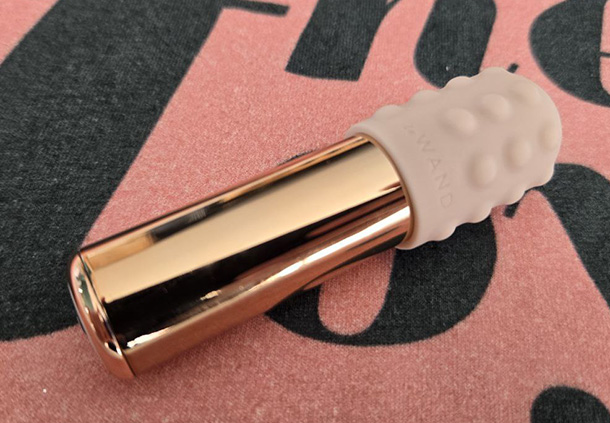
That moment told me what the Le Wand Bullet actually is — not the “extra powerful” chrome rocket the sales page describes, but a thoughtfully tuned mid-range motor in a genuinely clever shell, with composure where most bullets have chaos. It does several things exceptionally well. Raw power isn’t one of them.
Quick read: The Le Wand Bullet is not the strongest bullet in the drawer. It is the calmest, cleanest, most composed one — especially if hand buzz and noise usually pull you out of the moment.
Quick Verdict
| Design: |  (5.0 / 5) (5.0 / 5) |
| Comfort: |  (4.0 / 5) (4.0 / 5) |
| Power: |  (3.0 / 5) (3.0 / 5) |
| Experience: | (4.0 / 5) |
| Controls: |  (2.0 / 5) (2.0 / 5) |
| Value: | (3.0 / 5) |
The Le Wand Bullet won me over with its smart design, calm grip, and two distinct feels — but it’s only worth the price if you want elegance and versatility more than raw intensity.
You can buy this bullet toy here:
Buy if you want a quiet, comfortable-to-hold bullet with two genuinely different contact surfaces (bare metal precision and textured silicone softness), and you don’t need maximum power to get where you’re going.
Skip if deep, body-filling rumble is what your nervous system requires. This motor doesn’t reach that far.
Price: $89.99 retail (has been seen as low as ~$29 on sale). Compare to Lovense Ambi at ~$59 (nearly double the measured power) or We-Vibe Tango X at ~$79 (similar power, dramatically more hand fatigue).
Sensation profile: Surface-forward, moderately buzzy, focused on bare metal, softer and broader with the silicone sleeve. Moderate positional forgiveness — the small dome requires intentional placement. Sweet spot lives at speed 3, not max. Build style rewards controlled, deliberate stimulation rather than wide-area flooding.
Best for: Hand-fatigue sufferers, noise-sensitive users, temperature-play enthusiasts, and anyone who values refinement and sensory versatility over brute force.
The buying decision: choose this for comfort, quiet, temperature play, and two contact styles. Skip it if your body needs deep rumble or high-displacement power.
Marketing vs. Reality Score: 68/100
Verdict: Honest bones, inflated language.
The structural promises hold up. The Bullet is genuinely quiet (measured at 24–29 dB, where the room itself sits at 23 dB). The metal body does enable temperature play and delivers a different sensory quality than silicone. The two sleeves meaningfully transform the contact surface. The travel lock works. These claims survive testing.
Where the copy drifts from reality is power. The page calls this “extra powerful” with a motor that should “make your toes curl.” In measured terms, the Bullet lands at 5.5 out of 10 on our power index with a deep-rumble score of 2.7 — mid-range intensity that leans buzzy, not a powerhouse that reaches deep into tissue. For a true beginner with no reference point, it might feel impressive. For anyone who’s used a Lovense Ambi (power index: 10.0) or even lived with a Tango X, the word “extra” is doing heavy lifting the motor can’t support.
The page also markets this for “both internal and external stimulation” — a smooth, tapered metal capsule with no flared base, no retrieval cord, and no grip feature. The FAQ warns against anal use while promoting vaginal insertion. At 79mm × 23.5mm, this is small and slippery enough to create retrieval concerns during internal use that the design doesn’t address. I’d treat it as an external toy that the brand positions more broadly than the engineering justifies. And the waterproof specs contradict themselves on the same page — one section says 1.6 feet, another says 3 feet — which is sloppy copy on a premium product.
The Bullet is refined, not extra powerful
My lab read: The Le Wand Bullet lands at 5.5/10 on Power Index and 2.7/10 on Deep Rumble. Its peak tip displacement is 0.12mm. That is usable mid-range output, not “extra powerful” output — especially next to the Ambi at 0.36mm and a 10.0 Power Index.
The Bullet’s real strength is composure. It keeps the handle calm, the sound low and smooth, and the contact surface versatile. That is a different achievement than brute force.
Why this matters in a body: If your body needs deep vibration to push into tissue, the Bullet may feel one step short. If your body wants moderate, focused stimulation without hand buzz, noise anxiety, or harshness taking over, this is exactly where the Bullet earns its place.
What’s in the Box
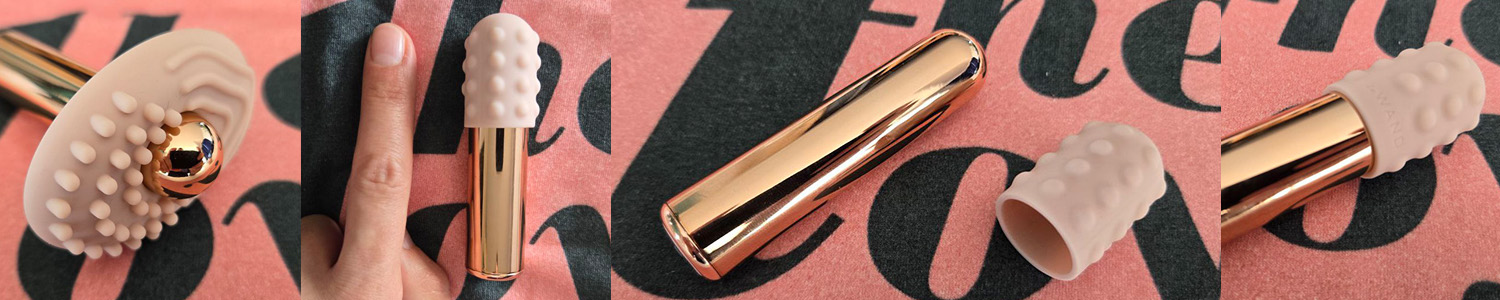
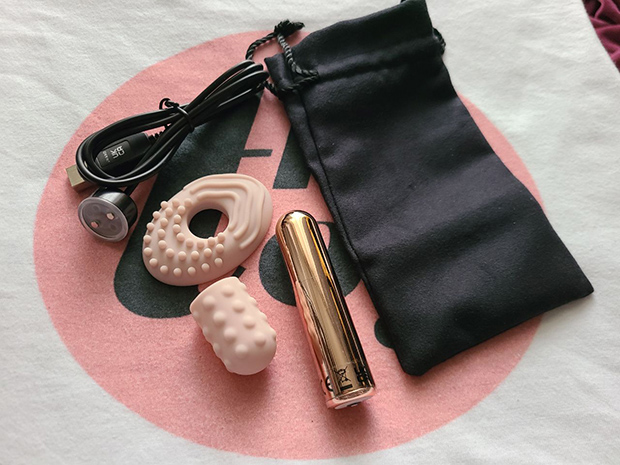
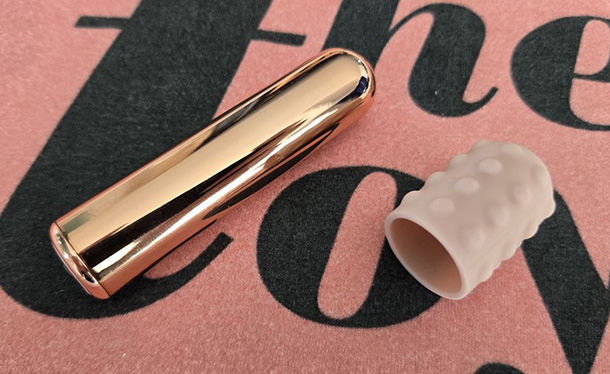
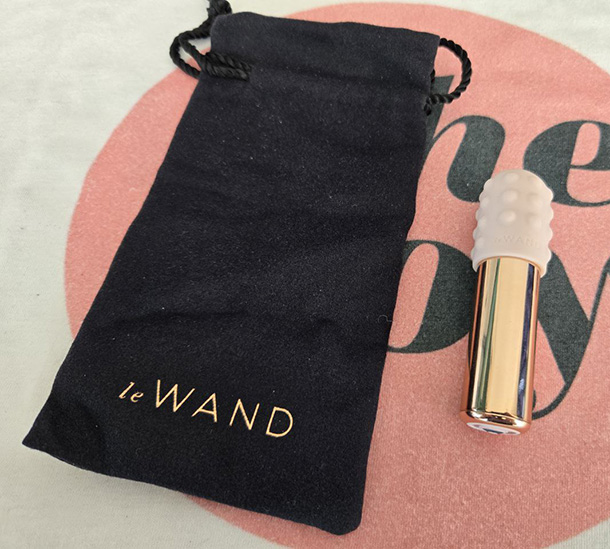
The Le Wand Bullet ships with the metal bullet body, two textured silicone friction-fit sleeves (nubbed surface pattern), a magnetic USB charging cable, and a storage pouch.
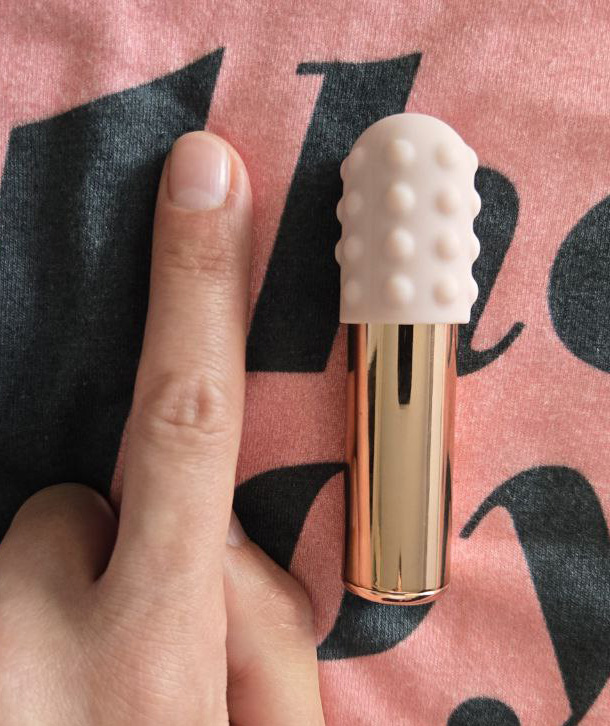
Specs: 79mm × 23.5mm (official). 70g official weight (I measured 63g without sleeves). Metal body at Shore A 99 hardness with silicone sleeve attachments at Shore A 70. Four intensity levels. Eleven vibration patterns. Single-button control. Magnetic charging, 2-hour charge time, 1-hour stated runtime. IPX7 waterproof. Travel lock. Available in Rose Gold and Dark Cherry. Currently listed at $89.99 and sold out at time of review.
What It Feels Like in the Body
The Le Wand Bullet is functionally two different toys — bare metal and silicone-sleeved — so I need to walk through both the intensity range and the surface switch. The motor behavior changes meaningfully across its four speeds in ways that matter more than just “louder” and “softer.”
Speed by Speed: How the Motor Shifts Character
Speed 1 — Tip displacement: 0.07mm | Handle displacement: 0.03mm
This is a real first speed, not a token gesture. For comparison, the Lelo Mia 2’s lowest speed measured 0.01mm displacement at the tip — which is functionally decorative, a suggestion of vibration rather than actual tissue movement. The Bullet’s 0.07mm is five times that. You’ll feel a medium-light, focused hum. Not a wake-up call, not a tease — somewhere between. The waveform at this speed was smooth and rounded in my oscilloscope captures, which means the vibration arrives without mechanical chatter or grittiness. Clean, steady, present.
This works well for warming up nerve endings that aren’t fully engaged yet, or on high-density tissue like nipples where you don’t need large excursion to create sensation. It’s also a useful starting point if you want to bring the toy to the clitoral hood area through underwear — the fabric filters the remaining surface bite, and the vibration pools gently at the contact point.
If that already sounds more promising than bare-skin directness, trust that instinct. Using a toy over underwear isn’t a timid workaround. For a lot of bodies it’s the difference between “technically stimulating” and actually workable.
Speed 2 — Tip displacement: 0.11mm | Handle displacement: 0.06mm
The tip output nearly doubles, and you can feel the vibration beginning to reach slightly past the skin surface — starting to engage the tissue beneath rather than only skating across it. But speed 2 is also this toy’s hand-buzzy outlier. The handle hits 0.06mm displacement and 12 mm/s velocity here — the highest handle readings at any speed. It’s not brutal (the Tango X hits 0.30mm in the handle, which is genuinely fatiguing), but you notice your fingers more at this setting than at any other. The motor seems to couple with the chassis at this particular speed in a way it doesn’t above or below it.
The good news: this is temporary. If speed 2 is your working intensity, you’ll feel the hand buzz but it won’t be punishing. And if you’re building toward higher settings, you’ll pass through this zone into the much more comfortable speeds above it.
Use lesson: don’t judge the Bullet by speed 2 alone. It is the buzziest setting in the hand, not the best expression of the toy.
Speed 3 — Tip displacement: 0.12mm (peak) | Handle displacement: 0.02mm
This is where the Le Wand Bullet earns its keep.
Displacement peaks at 0.12mm — the farthest the tip physically travels during each vibration cycle, and the single most important number for predicting whether stimulation feels like it has depth or stays at the surface. Research into clitoral anatomy — particularly O’Connell’s imaging work on the internal clitoral structures — has shown that the responsive tissue extends well beneath the visible glans. Vibration with enough displacement to reach past the surface has a meaningfully different quality than vibration that only addresses the outermost nerve endings: it feels heavier, more gathered, more like something building in the body rather than buzzing on top of it.
At 0.12mm, the Bullet isn’t a deep-tissue shaker — the Lovense Ambi reaches 0.36mm at the tip — but it’s the deepest this motor goes, and the sensation has genuine body. Simultaneously, the handle drops to 0.02mm, which is essentially background noise for your fingers. The motor has found its sweet spot: maximum tissue reach at the contact point, minimum interference at the grip.
The waveform at speed 3 shows more harmonic peaks — a pointier, more textured wave shape — which adds a layer of surface “zing” on top of the depth. In practice, it feels like the vibration has two layers working at once: a deeper push into tissue and a lighter, brighter presence on the skin. For many bodies, this dual texture is what sustains and builds arousal most effectively, because it doesn’t ask you to choose between depth and surface engagement. Both are happening.
The Bullet’s best setting is speed 3, not maximum
My lab read: Speed 3 is where the Le Wand Bullet reaches its deepest measured output: 0.12mm of tip displacement, while the handle drops to 0.02mm. At maximum, the tip moves slightly less — 0.11mm — even though acceleration and velocity go up.
That means speed 4 is not simply “more.” It is faster, brighter, and more urgent, but it does not push farther into tissue. Speed 3 is the setting where the motor gives you its best depth while keeping your hand out of the conversation.
Why this matters in a body: If max feels thinner or more surface-skimming, you are not imagining it. Backing down one click can give you a fuller, more settled sensation with less distraction in your grip. The best setting here is not the loudest setting on paper.
Speed 4 (max) — Tip displacement: 0.11mm | Handle displacement: 0.02mm
Here’s the thing most people won’t guess: max isn’t the deepest setting. Displacement drops slightly from 0.12mm to 0.11mm while acceleration and velocity increase (24g, 26 mm/s). The motor oscillates faster, but each oscillation travels less far. The sensation shifts from speed 3’s settled depth to something brighter, quicker, more urgent — more surface energy, less tissue reach. The waveform returns to a clean, smooth sine wave, which means the harmonic texture of speed 3 disappears. The vibration feels tidier, faster, and more uniform.
Whether that helps or hurts depends on your body’s arousal pattern. Some people need escalating pace right at the edge — the faster rhythm can be the neurological nudge that triggers orgasm. Others lose their thread when depth recedes, and they’ll find speed 3’s fuller displacement more effective right through to climax. Research on preferred genital stimulation patterns — particularly Herbenick’s 2018 probability-sample work — shows wide variation in what kind of touch drives orgasm, including pressure, rhythm, and consistency preferences. The Le Wand Bullet’s top two speeds offer genuinely different sensory profiles, not just “more” and “most.”
The handle stays comfortable at 0.02mm, and the motor sounds clean at 29 dB — audible if you’re listening for it up close, invisible under even a light blanket.
If your body consistently prefers speed 3’s settled depth to speed 4’s brighter urgency, you’re probably feeling the same split behind rumbly versus buzzy vibration: not just how strong a toy is, but where the sensation seems to land.
Practical translation: maximum is faster, not deeper. If speed 4 feels thinner, back down to speed 3 instead of assuming the toy is too weak.
Bare Metal vs. Silicone Hood: The Surface Changes Everything
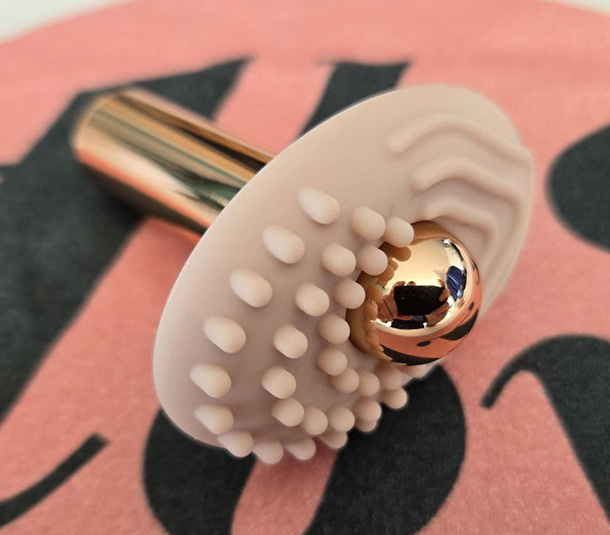
Without the sleeve, you’re pressing Shore A 99 hardness directly against your body. Metal at that hardness transmits vibration like a wire conducts current — nothing gets absorbed, nothing gets rounded off, nothing gets spread. What the motor produces, your nerve endings receive in full.
The sensation is precise and slightly sharp. The dome is smooth and continuous (no seam at the contact point — good design choice), and the contact area is small, maybe 12–15mm across at the tip. Stimulation concentrates tightly. On the clitoral glans or frenulum, this feels crisp and focused — every fraction of a millimeter in positioning changes what you feel. The margin for error is slim, but when placement is right, the directness is satisfying in a way that softer materials dilute.
Metal also responds to temperature. Run it under warm water for thirty seconds and the dome arrives pre-heated — a sensory dimension that silicone bullets physically cannot offer. The warmth relaxes tissue slightly on contact and adds a second channel of sensation alongside the vibration. Cold play works too (fridge, not freezer, wrapped in cloth, ten minutes). The thermal element isn’t gimmicky; it’s one of the few genuine differentiators this bullet has over every silicone competitor.
This feels like: crisp, exact vibration with a temperature layer on top. Bare metal is best when you want precision, glide, and a sharper read of the motor.
With the sleeve (Shore A 70, textured nubs), the experience shifts along three axes at once. The silicone damps the vibration’s sharpest frequencies — not the intensity, but the edge. The raised nub pattern creates multiple small contact points that distribute stimulation slightly wider. And the friction increases, so the sleeve grips tissue instead of gliding past it.
The result is softer on arrival, more forgiving with positioning, and more textured during movement. If you rock or circle the bullet, the nubs scroll across the contact area and create a mechanical stimulation layer riding on top of the vibration. You lose some of the bare-metal crispness — maybe 10–15% of that direct, electric quality gets absorbed — but you gain comfort, broader landing area, and a tactile dimension that makes the toy feel more versatile during longer sessions, especially as tissue becomes more sensitive through sustained arousal.
That’s also a good reminder that firmness changes more than comfort. Soft versus firm contact can shift a toy from sharp and exact to broader and easier to stay with, even when the motor underneath hasn’t changed at all.
Use lesson: use bare metal when you want precision. Add the sleeve when directness starts feeling too sharp or you want longer, more forgiving contact.
Real-World Use and Performance
Late Night, Partner Sleeping Nearby
This is the scenario the Le Wand Bullet was built for, whether or not the marketing admits it. I used it in bed with someone sleeping less than two feet away. Started with bare metal through underwear at speed 2 — the fabric softened the hard surface just enough to make it feel approachable rather than clinical. The vibration was firm, focused, and completely inaudible to anyone not touching the toy. Clicked to speed 3 on bare skin, light pressure against the clitoral hood. The handle went still. The hum disappeared into the ambient room noise. I could focus entirely on what was happening at the contact point without monitoring volume, managing grip fatigue, or tensing against hand buzz.
The measured noise profile explains why this works so well for stealth: the Bullet doesn’t just stay quiet in decibels (24–29 dB), it stays quiet in pitch character. Pitch annoyance scored 2 out of 10, with a clean hum and no high-frequency whine. Plenty of vibrators are technically quiet but produce a thin, mosquito-ish tone that your brain refuses to stop tracking. The Bullet’s sound blends into background room noise without giving your auditory cortex anything to latch onto. For anyone who’s ever lost arousal because they were distracted by a toy’s sound, that’s not a small thing.
This matters if: noise anxiety kills your arousal before the toy even gets going. The Bullet is quiet in the way that actually matters: low, smooth, and easy for the brain to ignore.
Bath, Bare Metal, Temperature Layering
I submerged the Bullet in warm bathwater for about a minute, then used it externally at speeds 2 and 3. The pre-warmed metal felt seamless against already-warm tissue — the toy stopped registering as a foreign object and started feeling like a natural extension of the water’s heat. The dome glided smoothly with the help of the water, and the vibration carried well without any noticeable motor change from immersion.
The waterproof claim held up in practice — no issues after approximately 20 minutes of partial and full submersion. But remember: water displaces natural lubrication. On bare metal, which relies on a slick surface for comfortable gliding, this can mean the tip catches or drags against tissue if you’re moving it around. A small amount of silicone-based lube on the metal (not the silicone sleeve — silicone lube degrades silicone material over time) solves this completely.
If you want the full compatibility breakdown, my guide on how to use lubricant with vibrators covers what works with metal, what doesn’t belong on silicone, and how to stop friction from pretending to be a power problem.
The Button Problem: One Loop, Fifteen Modes, Slippery Fingers
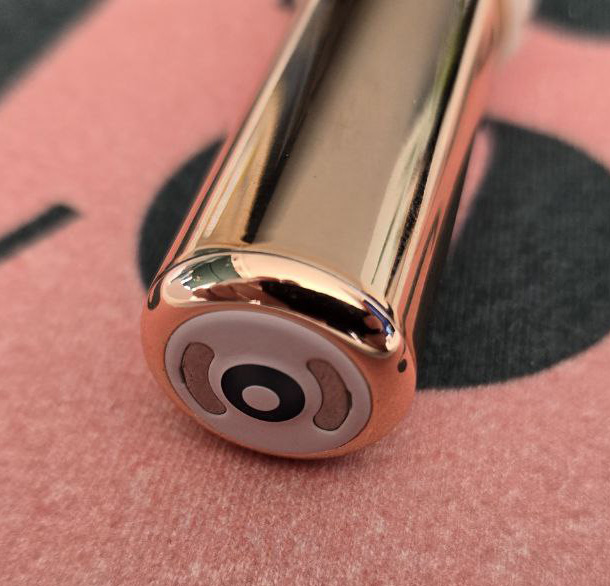
Le Wand frames the single-button interface as simplicity. In concept, yes. In practice, the interface cycles through 4 steady speeds followed by 11 vibration patterns, in one direction, with no reverse. Overshoot speed 3 and land in speed 4? One click gets you to pattern mode. Miss the pattern you want? You’re cycling through all of them to get back to speed 1. With dry hands, this is annoying but manageable. With lube on your fingers, pressing a flush-mounted button on a smooth metal cylinder while your attention is elsewhere requires more dexterity than the situation usually allows. I overshot my preferred setting twice in one session and ended up long-pressing to power off and restarting from scratch both times. It was faster than cycling through patterns I didn’t want, but it shouldn’t have been necessary.
The button’s flush placement looks elegant. It is not designed for wet-fingered urgency.
Real-world annoyance: the Bullet feels refined in the hand, but the one-button loop is the least refined part of using it.
What It Solves Well
Read this section as a comfort checklist: the Bullet solves hand fatigue, sound anxiety, and contact-style variety better than it solves power.
Hand fatigue from other bullets. The Le Wand Bullet’s finger fatigue index of 2.2 out of 10 places it among the most comfortable bullets I’ve measured. At its working speeds (3 and 4), handle displacement drops to 0.02mm — your fingers feel almost nothing while the tip is doing its best work. If you’ve owned a Tango X (FFI: 10.0) or an Exomoon (FFI: 8.8) and found your sessions ending because your hand gave out before your body responded, this solves that problem directly. There’s research showing that sustained vibration exposure affects fine motor control and tactile sensitivity in the hands — the same mechanism that makes industrial workers’ fingers go numb. A bullet that minimizes handle transfer isn’t just more comfortable; it preserves your ability to feel what you’re doing with precision.
Sound anxiety. Not volume anxiety — sound character anxiety. Plenty of people can tolerate a vibrator being audible in an empty room. What pulls them out of arousal is a sound that draws mental attention: a whine, a rattle, a pitch that cuts through background noise. The Bullet’s sound quality score of 8/10 and pitch annoyance of 2/10 mean it hums at a low, even frequency that your brain can file away and ignore. Combined with 24–29 dB volume, it disappears into normal bedroom conditions completely.
The “I want options but not complexity” problem. Two silicone sleeves give you three distinct contact surfaces from one purchase without requiring an app, Bluetooth pairing, firmware updates, or a second device. Bare metal for precision and temperature. Textured silicone for comfort and movement. You switch by pulling a cap on or off. It’s modularity at its simplest.
Where It Falls Short
The main drawback is simple: this is a refined mid-power bullet, not a deep-rumble tool. If your body needs force, the elegance will not replace output.
The power gap between marketing and motor. I keep coming back to this because it’s the most likely source of disappointment. A power index of 5.5 with deep rumble at 2.7 makes this a moderately capable bullet with a surface-forward vibration character (sharp/buzzy: 5.7, balance: 4.4). The vibration doesn’t travel deeply into tissue the way a higher-displacement, lower-frequency motor would. For bodies that need subsurface stimulation to build arousal — the kind that reaches the legs of the clitoris and the deeper structures O’Connell’s anatomical research mapped — this motor runs out of reach before it gets there. The displacement at speed 3 (0.12mm) gives it the best body of any setting, but compare that to the Ambi’s 0.36mm and you see the scale of the difference.
This isn’t a flaw in the toy. It’s a mismatch between marketing language (“extra powerful,” “make your toes curl”) and what the motor physically delivers. If the page said “refined, controlled, precise,” I’d have no argument.
Intensity control is coarser than the body often needs. Four steady speeds with meaningful jumps between them means fewer places to park. Research consistently shows that many people need to stay in a narrow intensity band during the arousal plateau — too little and sensation stalls, too much and it collapses into numbness. Four speeds is adequate, but an app-controlled toy like the Ambi or Exomoon gives you functionally infinite granularity through their slider interfaces. The Le Wand Bullet’s linearity score of 7/10 means the ramp between speeds is at least predictable — no jarring cliffs — but there are only three useful stopping points between “off” and “max.”
The internal-use claim oversteps the design. A bullet this smooth, this small, and this slippery — especially when lubricated metal gets involved — needs a retrieval feature to justify internal-use marketing. It doesn’t have one.
What Surprised Me / What Annoyed Me
Surprised me:
- How much the bare-metal-to-sleeve switch changes the felt experience. I expected a cosmetic difference. The sensation character genuinely shifts from focused and sharp to cushioned and textured — enough that it felt like switching toys
- Speed 3 outperforming max in depth. I don’t encounter this often. Most bullets build linearly or peak at maximum. The Bullet’s displacement dip at speed 4 (0.12mm → 0.11mm) is a small number, but you can feel the character change
- The sound profile. I’ve tested bullets that are similarly quiet in decibels but annoying in pitch. The Bullet’s hum is genuinely pleasant — a low, steady drone that my brain stopped registering within seconds
Annoyed me:
- The magnetic charger sits almost flush when slightly misaligned, and the toy gives no feedback to confirm charging has started. I left it “charging” overnight once and found it dead the next evening. I tug-test the magnetic connection every time now
- Overshooting into pattern mode and having to cycle through 11 patterns or just restart. This happened repeatedly
- The internal-use marketing on a product that doesn’t include any retrieval feature
Price and Value Analysis
At $89.99, the Le Wand Bullet is one of the more expensive bullets in its power class. The math only makes sense if you’re buying what this toy specifically does that others don’t.
What the premium pays for:
The metal body and temperature play — no silicone bullet offers this. Two contact surfaces from one purchase. A hand fatigue index (2.2) that ranks among the lowest I’ve measured in compact bullets. One of the cleanest sound profiles in the category. Build quality that reads as luxury object, not intimate device — relevant if discretion during travel or in shared spaces matters to you.
What the premium doesn’t pay for:
Power. Depth. Rumble. Granular intensity control. Long battery life. App connectivity. The Lovense Ambi delivers a 10.0 power index with 7.0 deep rumble for $59 — thirty dollars less and meaningfully stronger. If your body needs more motor than the Bullet provides, you’re paying $90 for refinement your nervous system may not prioritize.
The value math tilts significantly on sale. At the reported ~$29 sale price, the Le Wand Bullet becomes a genuinely strong value — you’re getting premium materials, excellent motor isolation, and modular contact surfaces for budget-bullet pricing. At full retail, it’s a premium for a specific set of qualities that only certain users will prioritize over raw capability.
Value frame: at full price, buy it only if metal, temperature play, and low hand fatigue matter to you. On sale, it becomes much easier to recommend.
Comparisons
| Metric | Le Wand Bullet | We-Vibe Tango X | Lovense Ambi | Lovense Exomoon | Lelo Lily 3 |
|---|---|---|---|---|---|
| Power Index | 5.5 | 5.2 | 10.0 | 4.9 | 4.3 |
| Deep Rumble | 2.7 | 2.4 | 7.0 | 2.3 | 3.3 |
| Hand Fatigue | 2.2 | 10.0 | 4.1 | 8.8 | 1.9 |
| Linearity | 7 | 3 | 10* | 10* | 8 |
| Sound Quality | 8 | 6 | 7 | 7 | 8 |
| Noise Range (dB) | 24–29 | 25–29 | 31–25 | 26–29 | 23–27 |
| Peak Tip Displacement | 0.12mm | 0.16mm | 0.36mm | 0.12mm | 0.15mm |
| Price | $89.99 | ~$79 | ~$59 | ~$49 | ~$89 |
*App-controlled toys allow micro-stepped adjustment, yielding perfect linearity scores.
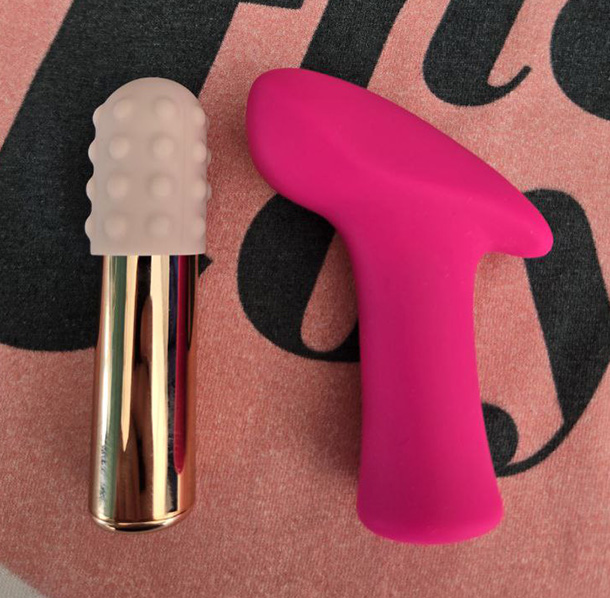
The Ambi comparison is the uncomfortable one. The Lovense Ambi costs $30 less and delivers vibration that reaches nearly three times as deep into tissue (0.36mm peak displacement versus 0.12mm). Its deep-rumble score of 7.0 versus the Bullet’s 2.7 means the Ambi produces the kind of heavy, body-filling vibration that reaches the internal clitoral structures more effectively. Hand fatigue is higher (4.1 vs 2.2) but still manageable. The tradeoffs: the Ambi requires its app to reach full potential, it’s a different shape entirely (angular, asymmetric), it offers no temperature play, and its sound profile — while not bad — doesn’t match the Bullet’s clean hum. If your body needs depth and rumble, the Ambi is the better motor for less money. If your priorities are comfort, discretion, temperature, and surface modularity, the Bullet earns its different approach.
Against the Tango X, the math shifts toward the Bullet for anyone who holds a toy for more than five minutes. Both land in similar power territory, but the Tango X’s handle vibration index of 10.0 — the highest I’ve measured in this category — makes it progressively harder to hold as sessions continue. The Tango X also has a wildly non-linear intensity ramp (linearity: 3), meaning the jumps between settings feel erratic and unpredictable. The Bullet gives you a smoother climb (7), more comfortable grip (2.2 FFI), and the metal/sleeve modularity, at roughly the same price.
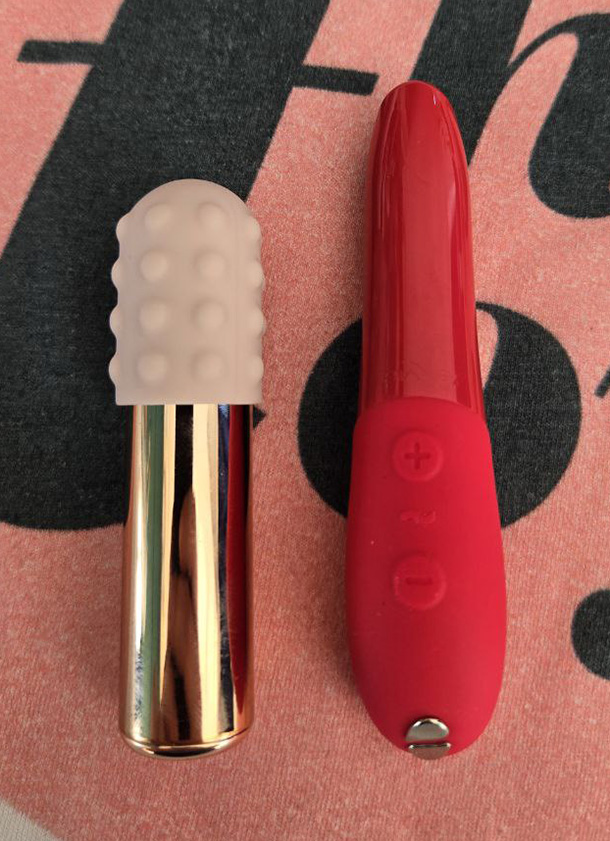
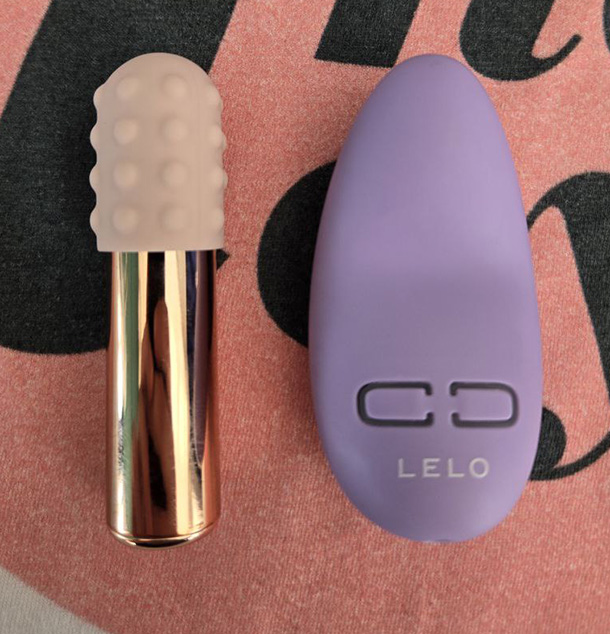
The Lily 3 is the closest match in philosophy — similar price, similar sound quality, even lower hand fatigue (1.9). It’s gentler (power index: 4.3), has better deep-to-sharp balance (6.5 vs 4.4), and is the quietest bullet I’ve measured in raw decibels. If you want the softest, most refined, least demanding external bullet available, the Lily 3 is probably your toy. What it doesn’t offer: temperature play, contact-surface switching, or the Bullet’s slightly higher intensity ceiling.
Who I Recommend It To
You respond well to focused, moderate-intensity stimulation and don’t need deep-tissue rumble to build arousal. You’ve been frustrated by hand fatigue from other bullets, or you’ve felt self-conscious about noise during use. Temperature play genuinely interests you — not as a novelty but as a sensory tool. You appreciate being able to switch between precise and cushioned contact depending on the day. You travel often and want a toy that disappears into a bag and doesn’t look like what it is. You prefer one-button simplicity and don’t need app control or granular intensity sliding. You’re a beginner whose body hasn’t declared a strong preference between buzzy and rumbly yet, and you want a quality starting point that sits in the middle rather than at an extreme.
Who Should Skip It
You know you need deep rumble. You’ve tried mid-range bullets before and always wished for more — more depth, more tissue-level reach, more motor behind the sensation. You prioritize power above refinement. You need more than four intensity steps to find and hold your sweet spot. You want the strongest possible stimulation in the smallest possible form factor. Or you’re watching your budget and realize the Ambi gives you more motor for less money, even if it can’t do what the Bullet does with metal and temperature.
Practical Care
Cleaning: Pull the silicone sleeves off after every use. Wash the metal body and sleeves separately with warm water and mild antibacterial soap or toy cleaner. The nub texture on the sleeves traps residue between bumps — take an extra few seconds with your fingertip to work between them. Rinse thoroughly and air dry or pat dry completely before reassembling. The metal body handles a 10% bleach solution if you want sterilization between partners — rinse well after.
Lube rules: Water-based works with everything. Silicone-based is safe on the bare metal body only — not the silicone sleeves. Oil-based works on both surfaces but isn’t condom-compatible.
Charging: Magnetic USB. Snap the magnetic end onto the bullet’s base and tug-test the connection — the charger can sit visually flush while slightly offset, and the toy provides no indicator to confirm active charging. Full charge: ~2 hours. Runtime: ~1 hour at mid-intensity. Magnetic chargers are one of the easiest places to get false confidence. How to charge a vibrator correctly covers the annoying little failure points that make a toy look handled when it isn’t.
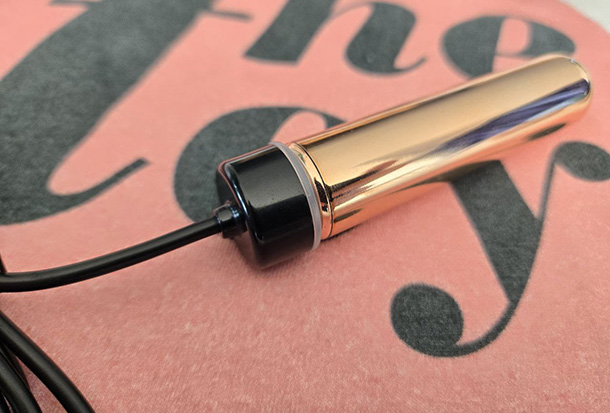
Travel lock: Long-press to activate. Took me two attempts without the manual. It holds.
Storage: Use the included pouch. The mirror-finish metal picks up micro-scratches if stored loose against other objects.
Tips I Learned the Hard Way
- Speed 3 is probably your destination, not speed 4. If you default to maximum and wonder why the sensation feels thinner than what you felt on the way up, back down one click. The displacement peak is at speed 3, and the extra depth there is more useful for most arousal patterns than speed 4’s faster-but-shallower urgency.
- Try the bare metal through underwear before committing to skin contact. Shore A 99 transmits everything the motor produces — the fabric adds just enough filtering to take the edge off without killing the vibration. It’s a good way to gauge whether your tissue appreciates or resists that level of directness on a given day.
- Switch from metal to sleeve mid-session, not at the beginning. Start with the crisp precision and temperature of bare metal, then slip the hood on when you want to sustain stimulation over a longer build without progressive sharpening from the hard surface. The transition itself adds a sensory shift that serves the session.
- If you overshoot into patterns, long-press to restart rather than cycling through. You’ll save yourself the frustration of passing through eleven modes you didn’t want.
- Apply silicone-based lube to the bare metal before bath use. Water eliminates natural lubrication, and metal-on-dry-tissue drag is the opposite of pleasant.
Final Verdict
The Le Wand Bullet occupies a specific and defensible position in a crowded bullet market: it’s the composure option. Not the power option, not the budget option, not the tech-forward option. It manages vibration transfer better than most toys I’ve measured at this size, it sounds cleaner than almost anything in its class, and the bare-metal-to-silicone modularity gives it a sensory range that single-material bullets can’t match.
Its limitations are real. The motor is mid-range in a category where the marketing pretends it’s top-tier. Four intensity steps on a single looping button isn’t enough resolution for everyone. The deep-rumble score of 2.7 means the vibration stays closer to the surface than many bodies need it to. And at $89.99, you’re paying a meaningful premium for qualities — metal construction, motor isolation, sound refinement — that only matter if they align with your specific priorities.
But the Le Wand Bullet taught me something that doesn’t always come through in spec sheets: a toy that keeps your hand comfortable and your ears unbothered creates space for your body to actually respond. I’ve tested more powerful bullets that I use less often, because the experience of using them — the hand buzz, the sound, the tension of grip — gets in the way of the experience they’re supposed to create. The Bullet doesn’t overwhelm the moment with its own noise, literal or mechanical.
Final shortcut: choose the Le Wand Bullet if you want quiet, low-fatigue, focused stimulation with metal and silicone options. Skip it if you want deep rumble, app control, or the most power for the money.
If what your body needs is a moderate, focused vibration delivered cleanly and comfortably, in a format that gives you temperature play and two contact textures, and you’re willing to let go of the assumption that maximum power equals best outcome — the Le Wand Bullet rewards that. If your nervous system has already told you it needs more, listen to it. The right motor is the one that matches your threshold, not the one with the most impressive adjectives on the box.
| Design: | (5.0 / 5) |
| Comfort: | (4.0 / 5) |
| Power: | (3.0 / 5) |
| Experience: | (4.0 / 5) |
| Controls: | (2.0 / 5) |
| Value: | (3.0 / 5) |
The Le Wand Bullet won me over with its smart design, calm grip, and two distinct feels — but it’s only worth the price if you want elegance and versatility more than raw intensity.
You can buy this bullet toy here:
What to Read Next
If this review helped you figure out what kind of bullet sensation your body actually likes, these are the next pieces I’d read.
- Best Bullet Vibrators Guide — if you want to compare the few bullets I think are genuinely worth your time.
- How to Choose a Bullet Vibrator — if you’re still sorting out whether you need more precision, more softness, more rumble, or less hand fatigue.
- How We Test Bullet Vibrators — if you want to see how I measure power, hand buzz, noise, and what those numbers actually mean on a body.
- How to Use a Bullet Vibrator — if you already own one and want better contact, better placement, and less needless irritation.
Sources Reviewed
- Herbenick, D., Fu, T., Arter, J., Sanders, S., & Dodge, B. (2018). Women’s Experiences With Genital Touching, Sexual Pleasure, and Orgasm: Results From a U.S. Probability Sample of Women Ages 18 to 94. Journal of Sex & Marital Therapy.
- O’Connell, H.E., Sanjeevan, K.V., & Hutson, J.M. (2005). Anatomy of the Clitoris. Journal of Urology.
- Foldes, P., & Buisson, O. (2009). The Clitoral Complex: A Dynamic Sonographic Study. Journal of Sexual Medicine.
Add comment